

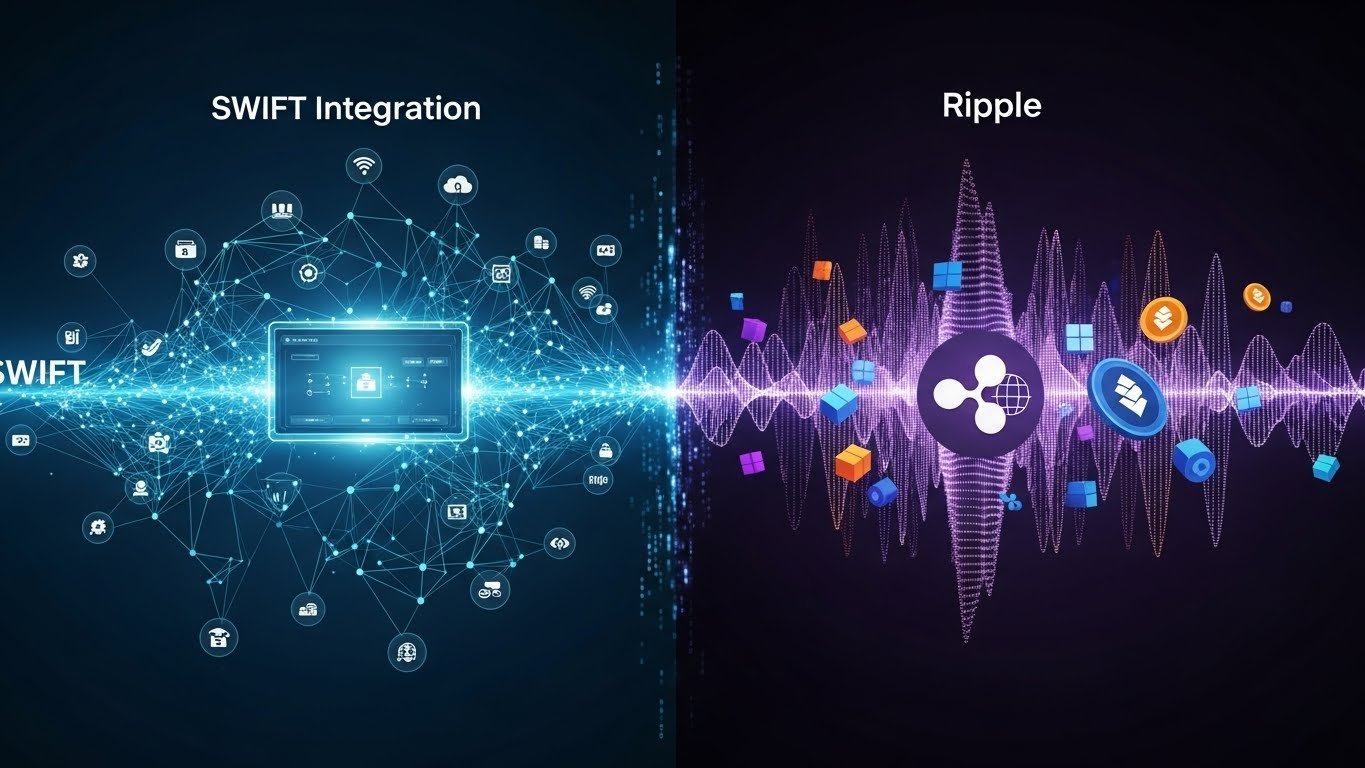
SWIFT Integration and Ripple Cross-border payments are still one of the most important systems in the world—and one of the most frustrating. Money can move instantly inside many countries, yet international transfers often feel like they’re stuck in another era, slowed down by time zones, correspondent banking layers, manual checks, and fragmented infrastructure. That is why the idea of SWIFT integration keeps gaining attention, especially when paired with Ripple and Ripple’s XRP.
At its core, the conversation is about bridging gaps. One gap is between messaging and settlement: a payment instruction can travel quickly, but the actual movement of funds can take longer due to intermediaries and liquidity requirements. Another gap is between traditional finance and digital rails: banks want the benefits of modern networks without sacrificing compliance, reliability, and control. When people talk about SWIFT integration “on the horizon,” they’re really pointing to a world where the global banking system becomes interoperable with next-generation settlement options.
Ripple has spent years focusing on that exact problem. Its enterprise approach targets speed, transparency, and efficiency for cross-border flows. Meanwhile, Ripple’s XRP has long been positioned—especially in public narratives—as a potential bridge asset that could reduce the need for pre-funded accounts and unlock on-demand liquidity. Whether one believes XRP is the right tool or not, the use case is easy to understand: if value can be exchanged across currencies quickly and reliably, the global economy becomes more fluid.
But it’s equally important to stay grounded. “Integration” can mean many things, and financial networks rarely shift overnight. The path is usually gradual: standards alignment, pilot programs, middleware connectors, regulatory clarifications, liquidity maturation, and step-by-step operational adoption. So instead of treating SWIFT integration as a single event, it’s more accurate to view it as a spectrum of interoperability milestones—some of which could meaningfully benefit Ripple’s XRP.
This article unpacks what SWIFT integration could realistically look like, why it matters, how ISO 20022 and interoperability trends shape the discussion, where Ripple’s XRP might fit, and what hurdles still stand in the way. The goal is clarity: an informative, engaging look at how the bridge could be built—without hype, and without underestimating the complexity of global payments.
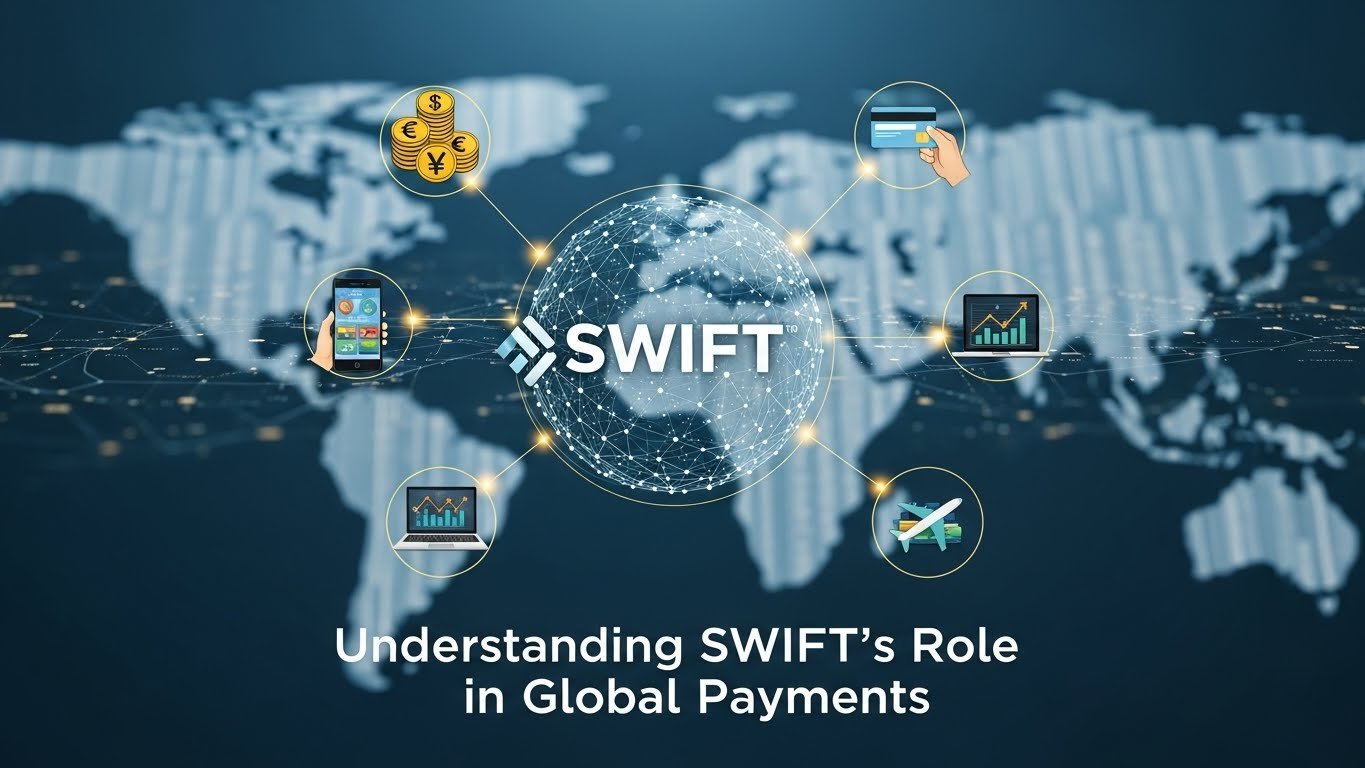
Understanding SWIFT’s Role in Global Payments
SWIFT is often described as the backbone of international banking. In practical terms, SWIFT has historically been strongest as a messaging network: it standardizes and transmits payment instructions and financial messages between institutions worldwide. That messaging function is crucial, because it provides a common language and routing framework across a vast web of banks and financial entities.
However, it’s a common misconception that SWIFT “moves the money.” Traditional cross-border payments usually settle through correspondent banking relationships and local clearing systems. The message may reach the destination quickly, but the settlement can involve multiple hops, reconciliation steps, and liquidity movements. That separation—fast messaging, slower settlement—creates room for innovation.
This is where the broader SWIFT integration conversation comes from. If SWIFT’s connectivity can be paired with faster settlement mechanisms, the entire pipeline improves. Banks could keep the global standardization benefits of SWIFT while tapping into more modern ways to settle value. That doesn’t require SWIFT to abandon its core identity; it requires SWIFT-connected institutions to gain more optionality at the settlement layer.
From an industry standpoint, the most likely future is not “one network replaces everything,” but “networks interoperate.” Interoperability is the new competitive advantage. And if interoperability expands, it naturally raises questions about whether Ripple’s XRP could become part of the toolkit for certain corridors or use cases.
What “SWIFT Integration” Really Means
The phrase SWIFT integration is powerful because it sounds definitive. In reality, it can describe several different levels of connection, ranging from simple compatibility to deep financial adoption.
At a basic level, SWIFT integration might mean that payment instructions and compliance data can flow smoothly between SWIFT messaging formats and external systems, including fintech rails or blockchain-based networks. That kind of integration is often achieved through middleware, APIs, and standards mapping. It improves operational efficiency without changing the underlying settlement instrument.
At a deeper level, SWIFT integration could mean orchestration: SWIFT-connected banks initiate transactions that can settle across multiple rails, including tokenized systems, while still using familiar workflows and controls. This is where interoperability becomes tangible, because banks don’t need to rebuild everything from scratch to experiment with modern settlement options.
At the deepest level, SWIFT integration could involve actual liquidity and settlement usage of a particular instrument—such as stablecoins, tokenized deposits, or potentially Ripple’s XRP—in production flows. This level requires much more than technical compatibility. It requires regulatory comfort, risk controls, liquidity depth, and reliable governance around how the settlement asset behaves during real-world stress events.
When people say SWIFT integration is “on the horizon,” they often blur these layers. The more useful question is: which layer is being discussed? Compatibility, orchestration, or asset-level settlement? The answer determines how relevant Ripple’s XRP truly is to the conversation.
Ripple’s Vision: Bridging Messaging, Liquidity, and Settlement
Ripple’s long-term narrative has centered on modernizing cross-border payments by reducing friction and making settlement faster. A major pain point in traditional cross-border flows is the capital cost of pre-funding accounts. Banks and payment providers often hold funds in different jurisdictions to ensure they can fulfill payments quickly. This is costly and inefficient, especially for smaller institutions or emerging-market corridors.
Ripple’s approach focuses on connectivity, speed, and liquidity efficiency. In many discussions, Ripple’s XRP is framed as a bridge asset that can be used to access liquidity on demand, potentially reducing the need for pre-funded accounts. The basic mechanism often described is that one currency is exchanged into XRP, transferred quickly, and then exchanged into the destination currency. In theory, this compresses time and reduces capital lock-up.
For Ripple’s XRP, the promise is not simply “crypto for payments.” The promise is a specialized role in settlement: bridging two fiat endpoints as a neutral intermediary asset. Supporters view this as a way to modernize cross-border flows without requiring every corridor to have direct liquidity pairs.
However, institutional reality is more complex. Banks care about volatility exposure, market liquidity, compliance obligations, auditability, and operational resilience. So even if Ripple’s XRP is technically capable of bridging, adoption depends on whether the end-to-end system meets institutional-grade requirements.
Still, the overlap between Ripple’s vision and the broader interoperability direction of global payments explains why SWIFT integration remains a recurring theme in XRP-focused discussions.
ISO 20022 and the Data Layer of Interoperability
One of the most significant changes in global payments has nothing to do with any specific coin or network. It’s about data. ISO 20022 is a global standard for financial messaging that supports richer, more structured payment information. Structured data improves compliance screening, reduces manual investigations, enhances reconciliation, and supports automation across the payment lifecycle.
Why does this matter for SWIFT integration and Ripple’s XRP? Because interoperability isn’t only about moving value; it’s also about moving information reliably. Many delays and costs in cross-border payments are caused by investigations, incomplete payment details, mismatched references, and compliance-related holds. If data becomes cleaner and more standardized, payments can flow more smoothly and predictably.
For any modern settlement approach to be viable within banking environments, it must coexist with the information layer banks rely on. ISO 20022 helps make that possible. It reduces the friction between different systems by ensuring payment messages carry consistent, structured fields.
In the context of SWIFT integration, ISO 20022 can act like a bridge between old and new. SWIFT-connected institutions modernizing their data formats may find it easier to connect to external rails, because the compliance and payment data can be mapped consistently. That does not guarantee XRP adoption, but it does make it easier for banks to trial alternative settlement options, which is indirectly supportive of the broader “bridge asset” idea behind Ripple’s XRP.
The Messaging–Settlement Gap: Where XRP Supporters See Opportunity
The phrase “bridge the gap” is not just a metaphor. It’s a literal description of a structural inefficiency in cross-border payments. Messaging systems can be standardized and fast, but settlement often depends on layered relationships. Every intermediary adds cost, time, and operational complexity. Even when the message is clear, settlement can be delayed by liquidity constraints or reconciliation steps.
This is where Ripple’s XRP is often positioned as a potential solution. If a bridge asset can provide on-demand liquidity, it could reduce reliance on multiple intermediaries and shrink the settlement timeline. In theory, this could make cross-border payments more similar to domestic instant payments: fast, trackable, and cost-efficient.
The reason SWIFT integration gets attached to this narrative is simple: SWIFT is the connectivity layer many institutions already trust. If SWIFT-connected banks could trigger faster settlement options while maintaining familiar compliance controls and message formats, they would gain speed without losing stability.
In practical terms, this could look like SWIFT messaging initiating a payment workflow that routes to an external liquidity mechanism. Ripple’s XRP could be one candidate for that mechanism in some corridors, depending on liquidity and regulatory factors.
Interoperability Scenarios: How Integration Might Actually Happen
It helps to visualize a few realistic scenarios for SWIFT integration rather than relying on dramatic, all-at-once expectations.
Compatibility and Straight-Through Processing
The first scenario is mostly operational: institutions improve straight-through processing by using structured data and modern messaging standards, reducing manual intervention. Ripple’s systems, payment gateways, and compliance tooling could become easier to integrate when message formats align. This scenario doesn’t require Ripple’s XRP to be used as a settlement asset, but it can still expand Ripple’s relevance in cross-border modernization.
Orchestration Through Middleware and Payment Hubs
The second scenario is orchestration: SWIFT-connected banks use payment hubs, middleware providers, or enterprise connectors to route certain transactions through faster rails. In this model, “integration” often happens indirectly, through vendors that connect multiple networks. This is common in banking technology, where institutions prefer proven integration layers over bespoke connections.
In this scenario, Ripple’s XRP could be used in limited cases where on-demand liquidity is advantageous, while other corridors might use different instruments. Interoperability becomes a menu, not a mandate.
Asset-Level Settlement for Select Corridors
The third scenario is the most ambitious: SWIFT-connected institutions adopt a digital settlement instrument in production for specific flows. This requires robust compliance frameworks, liquidity confidence, and risk management. If Ripple’s XRP were to be used here, it would likely happen first in corridors where traditional liquidity management is costly and where the economics clearly favor a bridge approach.
This scenario would be the most meaningful version of SWIFT integration from an XRP perspective, but also the hardest to achieve at scale.
What Must Be True for XRP to Play a Bigger Role
For Ripple’s XRP to become a serious settlement option within a SWIFT-connected ecosystem, several conditions would need to align. These aren’t marketing points; they’re institutional requirements.
First, regulatory clarity must be strong enough for banks to be comfortable. Institutions need consistent guidance on classification, reporting, custody, and compliance obligations. Without clarity, adoption remains cautious or limited to pilots.
Second, liquidity must be deep and reliable. A bridge asset is only useful if it can be exchanged efficiently at both ends of a transaction with minimal slippage. Liquidity must hold up not only during normal market conditions, but also during volatility spikes. Banks will not accept a settlement mechanism that behaves unpredictably when markets are stressed.
Third, operational controls must be mature. That includes transaction monitoring, counterparty risk controls, audit trails, settlement finality rules, and clear governance around incident response. Institutions need to know how problems are handled, who is accountable, and how quickly workflows can be corrected if something breaks.
Fourth, the cost-benefit story must be undeniable. Even if Ripple’s XRP can settle quickly, banks will compare it to alternatives like stablecoins, tokenized deposits, and evolving domestic instant payment linkages. Speed alone is not enough; it must reduce cost, reduce capital requirements, improve transparency, or lower operational risk.
If these conditions are met, SWIFT integration becomes less about headlines and more about measurable implementation.
Competition: Stablecoins, Tokenized Deposits, and New Settlement Rails
Any serious discussion of SWIFT integration must acknowledge that Ripple’s XRP is not the only candidate for modern settlement.
Stablecoins are attractive because they aim to reduce volatility and often align naturally with digital trading and settlement workflows. Tokenized deposits and bank-issued digital instruments are attractive because they can be integrated with existing banking models and compliance frameworks. Permissioned ledger solutions are attractive because they can be designed with institutional controls from day one.
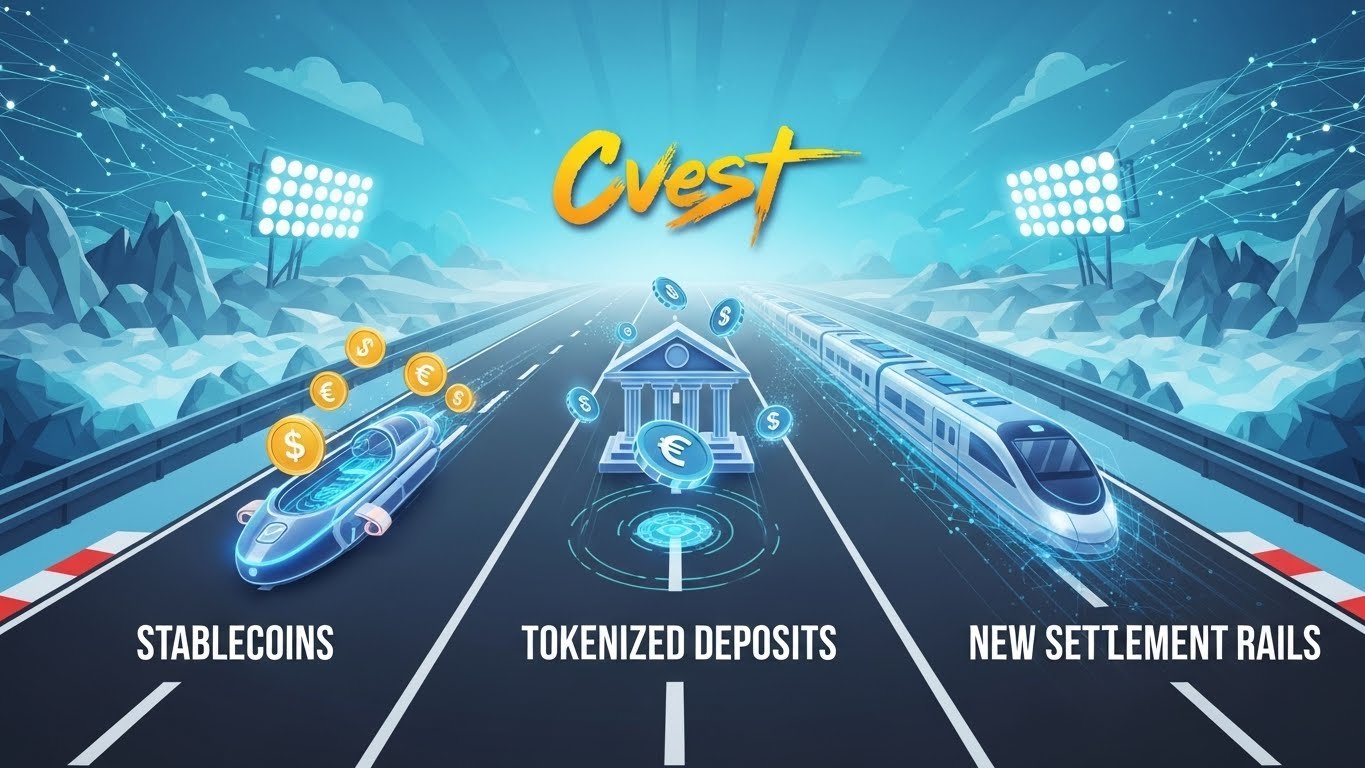
This doesn’t mean XRP can’t compete. It means XRP must win on specific advantages—such as liquidity efficiency, speed, and integration readiness—while offering robust risk mitigation. For Ripple’s XRP, the opportunity is to demonstrate that it can function as a bridge in ways that alternatives cannot match in certain corridors or use cases.
In a multi-rail world, the “winner” might not be one instrument. It might be interoperability itself. And that is why SWIFT integration remains such a major theme: if SWIFT becomes a connector across rails, the settlement landscape becomes more competitive, not less.
Why the Horizon Matters Even Without a Single Announcement
Financial infrastructure evolves through phases: standards upgrades, controlled pilots, selective production deployment, and scaling. The public often expects a dramatic moment, but banking change is more like tectonic movement than a fireworks show.
That is why the “horizon” framing makes sense. SWIFT integration doesn’t need to arrive as a headline partnership to reshape the market. It can arrive through incremental interoperability—more structured data, more orchestration capability, more pilot pathways, and more institutional comfort with digital settlement mechanisms.
For Ripple’s XRP, the key is whether it becomes one of the assets institutions can confidently use when they want on-demand liquidity. The bridge narrative will keep returning as long as the messaging–settlement gap exists. The only question is whether XRP becomes part of the practical answer, or remains mostly a symbolic idea in the conversation.
Conclusion
The global payments system is moving toward interoperability, richer data standards, and faster settlement options. In that shift, SWIFT integration is best understood as a spectrum of possibilities: from improved compatibility and orchestration to deeper settlement connectivity across multiple rails. Ripple’s enterprise focus aligns with the direction of travel, and Ripple’s XRP continues to be discussed as a potential bridge asset that could reduce friction and improve liquidity efficiency in cross-border flows.
But meaningful adoption depends on real institutional conditions: regulatory clarity, reliable liquidity, strong risk controls, and a clear cost-benefit advantage over alternatives like stablecoins and tokenized deposits. If those conditions align, Ripple’s XRP could play a more practical role in bridging currencies and corridors—especially as interoperability becomes the dominant design principle of modern finance.
In short, the bridge is not a single event. It’s a pathway being built step by step. And the question isn’t whether the horizon exists—it’s which technologies prove ready to cross it.
FAQs
Q: What does “SWIFT integration” mean for Ripple’s XRP?
SWIFT integration can mean anything from messaging compatibility and middleware connections to deeper orchestration where SWIFT-connected institutions can route settlements across multiple rails. For Ripple’s XRP, the strongest interpretation would involve XRP being used as a bridge asset for settlement in some corridors, but that requires institutional-grade readiness.
Q: Would SWIFT integration automatically make XRP the global settlement asset?
No. Even in a highly interoperable world, institutions may use different settlement instruments depending on corridor needs, regulations, liquidity availability, and risk preferences. Ripple’s XRP would likely compete alongside stablecoins, tokenized deposits, and other settlement options.
Q: Why is ISO 20022 important in this conversation?
ISO 20022 improves structured payment data, which makes automation, compliance screening, and reconciliation easier. Better data reduces friction between systems and can make SWIFT integration with external rails more practical, indirectly supporting experimentation with modern settlement tools, including Ripple’s XRP.
Q: What is the biggest obstacle for XRP in institutional settlement?
The biggest obstacles are typically regulatory clarity, volatility management, and institutional risk controls. Banks need predictable rules, deep liquidity, and operational safeguards before using any bridge asset at scale—even one as widely discussed as Ripple’s XRP.
Q: How can readers evaluate future claims about SWIFT integration and XRP?
Focus on concrete signals: named pilots, measurable transaction volumes, regulatory approvals, audited operational processes, and clear statements from primary institutions. If Ripple’s XRP is genuinely being used in production settlement flows connected to SWIFT-based workflows, there will be verifiable details beyond speculation.
See More: XRP USD Dips Will $1.70 Support Hold?
