


UBS CEO Blockchain Future has always evolved under pressure. When ATMs arrived, they changed how people accessed cash. When online banking became mainstream, it changed how customers interacted with their accounts. When mobile apps took over, banking became something people carried in their pockets. Now, another shift is building—one that isn’t just about a better interface, but about replacing the behind-the-scenes machinery that powers payments, recordkeeping, and ownership.
That’s why the UBS CEO’s bold prediction has captured so much attention: blockchain is the future of traditional banking. The statement doesn’t imply that banks will abandon regulation or become speculative trading hubs. Instead, it points to something more structural. Banks rely on ledgers—systems that track balances, ownership, obligations, and risk. Today, those ledgers are scattered across institutions, reconciled through messaging, and settled with delays that create friction and cost. Blockchain proposes a different approach: a shared ledger that can be trusted by multiple parties, updated in near real time, and secured with cryptography.
For most people, “blockchain” still evokes headlines about crypto prices. But within financial institutions, blockchain increasingly means infrastructure—the kind of technology that can reduce settlement time, lower operational overhead, and make complex financial processes more transparent and auditable. If you strip away the hype, the practical promise is simple: fewer moving parts, fewer manual checks, and fewer mismatched records.
In this article, we’ll explore what it means when a global bank leader suggests blockchain is the future of traditional banking. We’ll break down the core banking problems blockchain solves, where it can deliver the biggest impact, what risks banks must manage, and how tokenization, digital assets, distributed ledger technology, and smart contracts could shape the next generation of regulated finance. You’ll also see why the most likely future is not “banks versus blockchain,” but banks using blockchain to become faster, safer, and more efficient—without sacrificing trust.
Why the UBS CEO’s Prediction Is a Big Deal
When a CEO at a major bank speaks, markets listen—but the banking world listens even more closely. The UBS CEO’s prediction matters because it signals that blockchain is no longer being treated as a novelty. It’s being positioned as a long-term capability that traditional banking can adopt in a regulated, measured way.
Banks are conservative for good reason. They manage deposits, credit creation, compliance obligations, and systemic risk. They don’t adopt new technology just because it’s trendy; they adopt it when it improves resilience, reduces cost, or creates new products in a controlled manner. So when the UBS CEO frames blockchain as the future of traditional banking, it suggests leadership is looking beyond experiments toward a strategic direction.

What makes blockchain unique is that it touches the “plumbing” of finance. Many past innovations improved the customer layer—better apps, better onboarding, better interfaces. Blockchain targets the settlement layer, the custody layer, and the coordination layer between institutions. That’s where a surprising amount of cost and complexity lives, and that’s why the idea has staying power.
From Buzzword to Banking Infrastructure
The early public narrative around blockchain was often dominated by speculation. Traditional banking, however, is primarily interested in predictable outcomes: faster settlement, reduced reconciliation, robust auditing, and secure transfer of value. Over time, that shift in focus has changed the tone inside finance. Blockchain is increasingly discussed as distributed ledger technology that can complement existing systems.
This infrastructure framing is crucial. It means blockchain can be adopted without asking customers to change behavior. A bank can use blockchain rails under the hood while customers still use familiar accounts, cards, and payment apps. If the system works better, most customers won’t even notice the technology shift—and that’s exactly how major infrastructure upgrades succeed.
The Convergence Model
The most realistic scenario is convergence. Traditional banking keeps its regulatory foundation—identity verification, anti-money laundering controls, consumer protection, and risk governance—while blockchain upgrades how financial institutions coordinate records and settle obligations.
In that model, blockchain is not replacing traditional banking. It’s helping traditional banking operate with modern efficiency.
What Blockchain Changes in Traditional Banking
To understand why blockchain is the future of traditional banking, it helps to focus on one word: coordination. Banking is an ecosystem. Money moves between banks, across borders, through clearinghouses, and via counterparties that keep their own independent records. Those independent records must be reconciled, verified, and settled. The system works, but it works with friction.
Blockchain changes coordination by creating a shared state of truth. Instead of each party keeping separate ledgers and reconciling later, participants can reference a synchronized ledger where updates are cryptographically validated. That shift can reduce duplication, disputes, and delays.
Settlement Speed and Liquidity Efficiency
In many parts of finance, settlement delays aren’t just inconvenient—they’re expensive. When settlement takes time, institutions must hold liquidity buffers and manage credit risk during the waiting period. The longer the gap between trade execution and final settlement, the more room there is for failure, disputes, or operational errors.
Blockchain-based settlement can shorten that cycle. The goal is not reckless speed, but predictable finality with better transparency. When a transaction is settled, participants can see it, verify it, and reduce the need for costly back-office processes that exist largely to manage uncertainty.
The End of Endless Reconciliation
Reconciliation is one of the hidden engines of banking cost. When multiple parties have separate ledgers, the industry pays a continuous “tax” in time, personnel, and systems to keep those ledgers aligned. Blockchain can reduce that by enabling shared records across permissioned participants. In a banking context, this is often implemented with governance controls that define who can validate, view, or update the ledger.
This is why blockchain is frequently presented as a back-office revolution rather than a customer-facing gimmick.
Programmability Through Smart Contracts
Another banking-relevant capability is smart contracts—programmable rules that execute automatically when conditions are met. In a regulated financial setting, the most compelling use cases are not wild experiments, but reliable automation. For example, if delivery occurs, payment releases. If compliance checks pass, settlement proceeds. If an interest payment date arrives, a distribution triggers according to predefined rules.
Used carefully, smart contracts can reduce processing errors, speed up operations, and make complex financial products easier to administer.
Tokenization: The Bridge Between Traditional Banking and Blockchain
Tokenization is one of the strongest arguments for why blockchain is the future of traditional banking. It’s also one of the easiest concepts to misunderstand.
Tokenization, in a banking sense, means representing a real-world asset as a digital token on a blockchain. The asset might be a bond, a fund share, a deposit claim, or even a structured product. The token acts as a regulated representation of ownership or entitlement, designed to be transferred and settled more efficiently than traditional records allow.
Tokenization doesn’t require removing legal frameworks. Instead, it brings legal ownership and operational handling closer together by making transfer and recordkeeping more direct.
Tokenized Bonds, Funds, and Structured Products
Traditional issuance and settlement processes can be slow and layered. Tokenization can streamline issuance, allow more granular ownership, and potentially reduce settlement timelines. For investment products, tokenization can also improve transparency around holdings and reduce administrative complexity.
Banks are interested because tokenization can open new distribution models. A product that is hard to transfer today might become easier to handle in a tokenized form, especially for institutional workflows.
Fractional Ownership and New Access Models
Tokenization can also support fractional ownership in a cleaner way. While fractional investing exists today through intermediaries, tokenization can make fractional units more native to the system. That can broaden access—though any real expansion will still depend on regulation, suitability requirements, and product design.
The point is not that every customer will hold tokens directly. The point is that tokenization can make the underlying asset administration more efficient, which can reduce costs and enable more flexible offerings.
Better Auditability and Reporting
In traditional banking, reporting often means compiling data from multiple systems. With tokenization on blockchain, certain audit and reporting functions can become more straightforward because the ledger itself carries a verifiable record of transfers and ownership states, subject to privacy and permissioning controls.
That’s one reason tokenization is often paired with institutional-grade blockchain networks designed for compliance.
Payments and Cross-Border Transfers: A Natural Blockchain Use Case
Payments are one of the clearest areas where blockchain can help traditional banking. Domestic payments have improved over time, but cross-border transfers still face friction: correspondent banking chains, cut-off times, multiple intermediaries, and limited real-time visibility.

Blockchain can improve payments by offering near real-time status updates, faster settlement, and a single shared record of payment progression. In corporate and institutional settings, that visibility can be as valuable as speed, because it helps treasury teams manage liquidity with greater certainty.
Real-Time Transparency for Treasury Teams
Large businesses often need to know not only that a payment was initiated, but exactly where it is in the chain. Blockchain-based payment rails can provide better traceability, reducing the need for time-consuming investigations and manual follow-ups.
That can improve cash management, reduce operational workload, and lower the risk of errors in high-volume payment environments.
Programmable Payments and Conditional Releases
Blockchain also enables conditional logic in payments. For example, payment could be released only after delivery confirmation or after a contract milestone is met. In traditional banking, these conditional setups often require manual administration or third-party escrow arrangements. On blockchain, conditional rules can be embedded as part of the settlement workflow.
In a regulated environment, the emphasis is on reliability, auditability, and controlled execution—not experimentation for its own sake.
How Blockchain Could Reshape Core Banking Operations
If blockchain is the future of traditional banking, the transformation will likely arrive in phases, with the biggest changes appearing first where inefficiency is most expensive. Many banking leaders see blockchain’s potential across several core functions.
Clearing and Settlement in Capital Markets
Capital markets involve massive volumes and strict processes. Trades are executed quickly, but settlement can take longer due to the complexity of post-trade infrastructure. Blockchain-based settlement can reduce settlement timelines, reduce counterparty risk windows, and potentially free up collateral.
The key benefit here is not simply speed; it’s reducing the cost of managing settlement risk and operational complexity.
Collateral Management and Repo Markets
Collateral moves constantly across financial markets. Managing collateral efficiently is a major operational task, especially when assets are pledged, substituted, or moved across jurisdictions. Blockchain can improve collateral tracking and make certain movements more transparent and automated, reducing errors and reducing the time it takes to confirm collateral status.
Identity, Permissions, and Compliance Controls
Banks must know who is transacting and whether transactions comply with regulations. Modern blockchain implementations for banking often incorporate identity layers and permission controls. This is where permissioned blockchain approaches become important: they allow banks to gain blockchain benefits while still enforcing access policies, privacy, and compliance requirements.
In this sense, blockchain doesn’t weaken regulation; it can strengthen the ability to prove compliance and audit transactions.
Regulation, Risk, and the Banking-Grade Blockchain Reality
No serious discussion about blockchain and traditional banking can ignore regulation. The financial system is regulated because trust matters, and because failures can harm consumers and create systemic risk. If blockchain is the future of traditional banking, it must operate under regulatory expectations rather than trying to bypass them.
That means banking-grade blockchain solutions typically focus on controlled participation, clear governance, strong auditing, and robust security.
Privacy: The Non-Negotiable Requirement
Traditional banking cannot expose sensitive transaction data publicly. Many public blockchains are transparent by design, which is useful for open verification but problematic for confidentiality. Banking-grade solutions address this through permissions, privacy-preserving techniques, and selective disclosure.
The future likely includes a mix of models. Some activities may use public networks with privacy layers, while other activities stay on permissioned rails. The choice depends on risk, jurisdiction, and business requirements.
Security and Key Management
Blockchain introduces new security responsibilities, especially around cryptographic keys. If keys are mishandled, assets can be lost. That’s why institutional custody, secure key storage, audited smart contracts, and operational controls are essential. In traditional banking, the bar for security is high, and blockchain must meet it to become foundational.
This is one reason large banks move carefully: the technology must be proven under real operational pressure.
Governance and Accountability
Traditional banking has clear accountability structures. Blockchain networks require governance frameworks defining roles, responsibilities, and dispute procedures. If an error occurs, the system needs a structured way to resolve it. For blockchain to become the future of traditional banking, governance must be as mature as the technology.
The Adoption Path: How Blockchain Moves From Pilot to Standard
Even if the UBS CEO is right that blockchain is the future of traditional banking, that future will not arrive overnight. Banking technology evolves through careful stages: controlled testing, pilot programs, limited production, then gradual expansion.
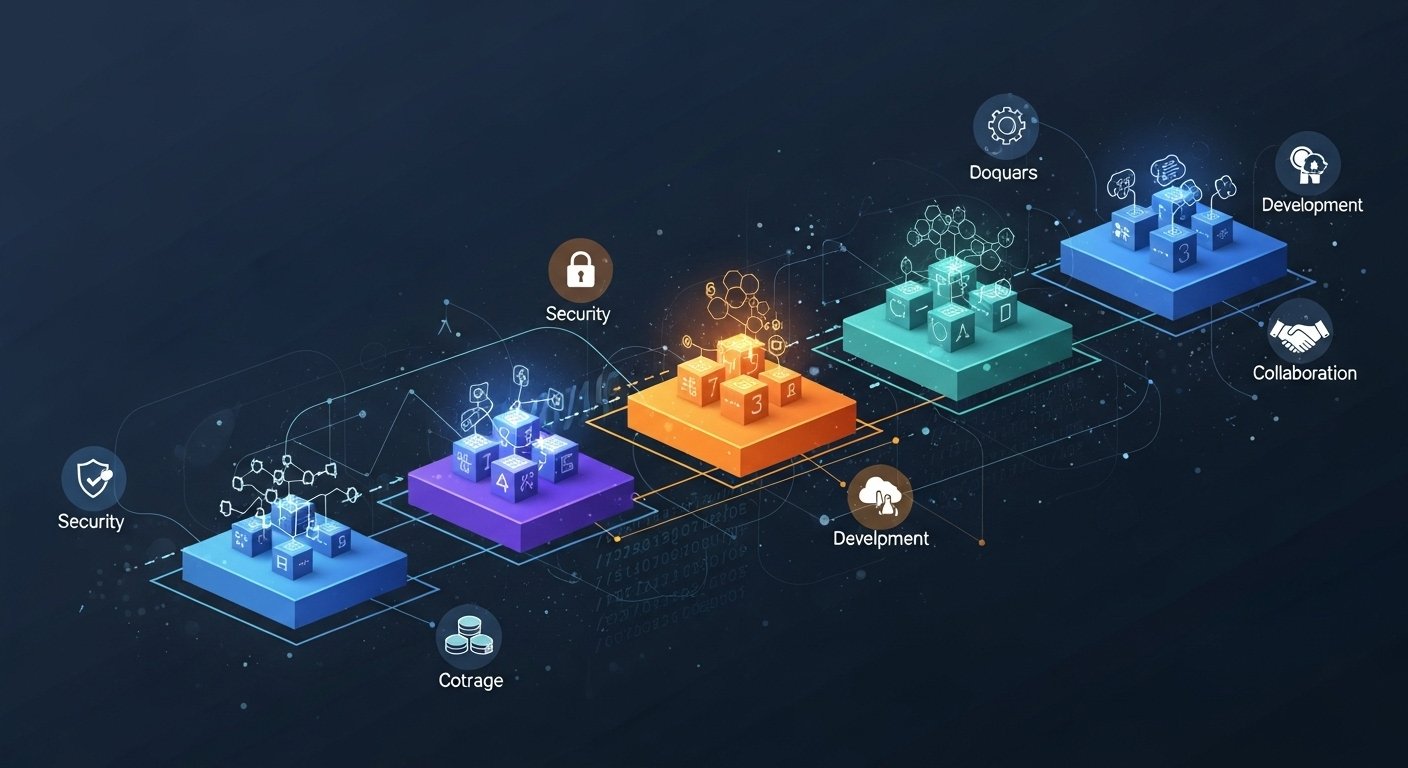
This staged approach is not slow because banks are “behind.” It’s slow because banks must ensure resilience, compliance, and reliability. A system that processes high-value transfers cannot fail casually.
In practice, adoption often begins in institutional contexts—where volumes are high, processes are complex, and cost savings are measurable. Over time, those institutional gains can filter into customer benefits such as faster settlement, lower costs, and more transparent transaction experiences.
Challenges That Could Slow the Blockchain Future
Blockchain has real potential, but it also faces real constraints. A balanced view helps readers understand why progress can look uneven.
Interoperability remains a major challenge. If different institutions adopt different networks that can’t communicate, the efficiency benefits shrink. Standards can help, but standards take time.
Legacy integration is another hurdle. Banks can’t simply switch off existing systems. Blockchain must integrate with core banking platforms, compliance tools, risk engines, and reporting systems. That integration work is often the hardest part.
Finally, perception matters. Many customers still associate blockchain with speculative risk. Banks must communicate clearly that blockchain infrastructure is not the same thing as risky trading behavior. In regulated banking, the aim is stability and efficiency.
Conclusion
The UBS CEO’s bold prediction that blockchain is the future of traditional banking is persuasive because it aligns with banking’s real needs. The industry spends enormous resources on settlement delays, reconciliation, fragmented records, and operational complexity. Blockchain addresses these issues at the infrastructure layer, where the biggest efficiency gains often live.
The most likely outcome is a convergence where traditional banking remains the trusted, regulated framework for money and risk management, while blockchain becomes part of the rails that move value and track ownership. Through tokenization, smart contracts, real-time settlement, and banking-grade privacy controls, blockchain can modernize finance without requiring customers to abandon familiar banking experiences.
If the last few decades taught us anything, it’s that the winners in financial technology are not the loudest innovations, but the ones that quietly become standard infrastructure. Blockchain is increasingly positioned to be exactly that.
FAQs
Q: Does this mean banks will replace their entire systems with blockchain?
Not all at once. Most banks will integrate blockchain gradually, starting with specific workflows like settlement, payments, or tokenization. Traditional systems will coexist for years while institutions migrate functions where blockchain offers the biggest operational advantage.
Q: Is blockchain in traditional banking the same as cryptocurrency?
Not necessarily. Cryptocurrency is one application that uses blockchain, but banks often use blockchain as distributed ledger technology for regulated assets and processes. The focus is on efficiency, auditability, and compliance, not speculation.
Q: What does tokenization actually change for investors?
Tokenization can simplify ownership transfer, enable faster settlement, and improve operational transparency. Over time, it may also support new product structures, more flexible access models, and smoother administration of investment vehicles.
Q: How will banks keep blockchain transactions private?
Banking-grade blockchain systems often use permission controls and privacy techniques so only authorized parties can view sensitive details. The future of traditional banking with blockchain will prioritize confidentiality while still preserving auditability.
Q: When will customers notice blockchain’s impact in everyday banking?
Many customers may not notice blockchain directly because it can operate behind the scenes. The noticeable changes are more likely to be practical benefits like faster transfers, clearer transaction tracking, and potentially lower friction in certain banking services over time.
Also More: Blockchain Capital Markets Rewiring Rails for Financial Revolution
