

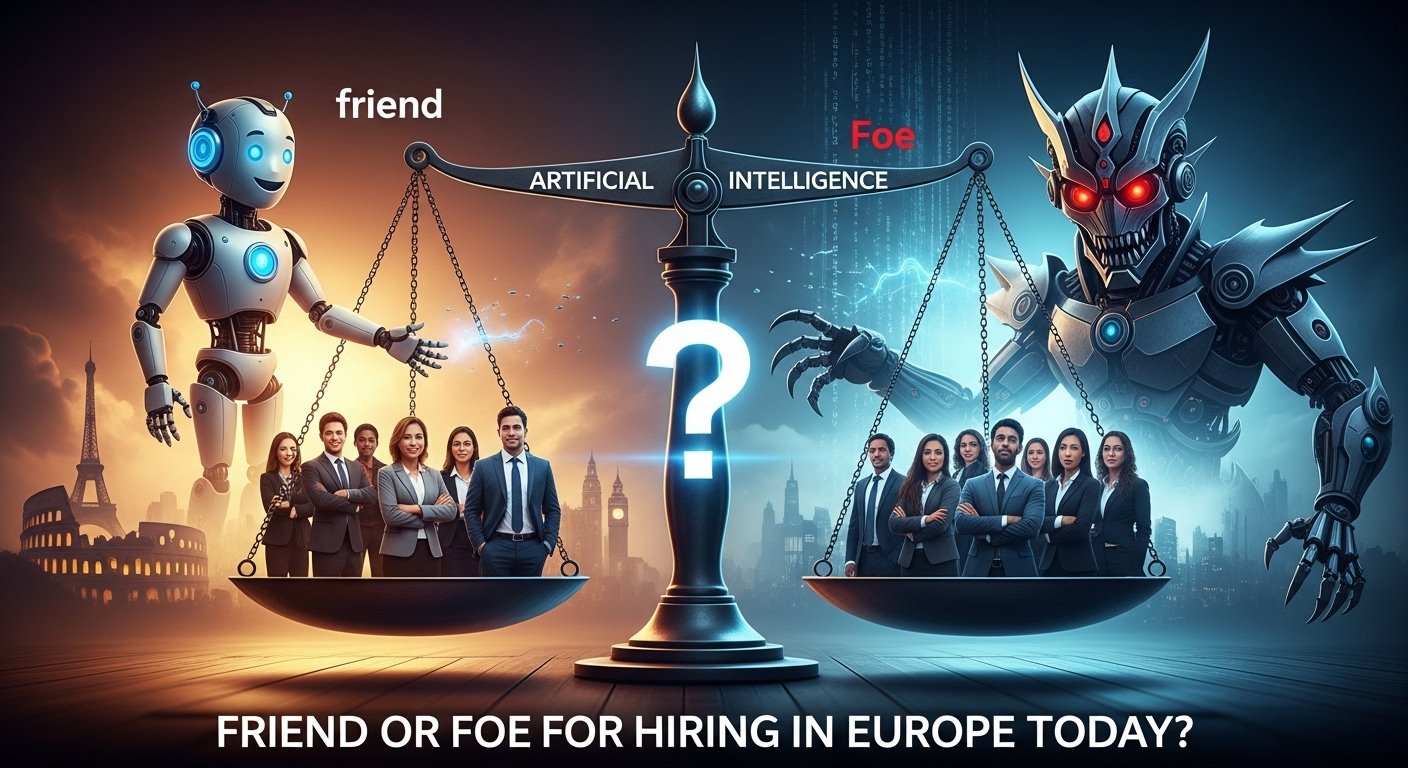
Artificial Intelligence has rapidly transformed the way organizations recruit talent across the globe. In Europe, where employment laws are strict and worker protections are deeply embedded in policy frameworks, the rise of Artificial Intelligence in recruitment has sparked intense debate. Is Artificial Intelligence a friend or foe for hiring in Europe today? The answer is far from simple.
On one hand, Artificial Intelligence offers powerful tools that streamline talent acquisition, automate repetitive hiring tasks, and enhance candidate screening. On the other hand, concerns about algorithmic bias, data privacy, and ethical decision-making have led regulators and HR professionals to question its long-term impact. With the implementation of regulations such as the EU AI Act and the General Data Protection Regulation, Europe is attempting to strike a delicate balance between innovation and protection.
This article explores whether Artificial Intelligence is truly a friend or foe for hiring in Europe today. We will examine the advantages, risks, regulatory landscape, ethical challenges, and future trends shaping AI-driven recruitment across European markets.
The Rise of Artificial Intelligence in European Recruitment
Artificial Intelligence in recruitment is no longer a futuristic concept. From Paris to Berlin, from Amsterdam to Madrid, companies are integrating AI-powered solutions into their hiring processes. Automated CV screening, predictive analytics, and AI-driven chatbots are now standard features in many recruitment platforms.
European employers face intense competition for skilled talent, particularly in sectors such as technology, healthcare, and engineering. Artificial Intelligence helps HR departments process thousands of applications quickly and identify the most promising candidates using machine learning algorithms and data-driven hiring models.
Moreover, Artificial Intelligence enhances efficiency in cross-border recruitment. In a region where multiple languages and cultural differences exist, AI-powered systems can analyze multilingual resumes and standardize evaluation criteria. This capability makes Artificial Intelligence particularly attractive for multinational organizations operating within the European Union.
However, rapid adoption also raises pressing questions: Can algorithms truly make fair hiring decisions? And does efficiency come at the expense of human judgment?
How Artificial Intelligence Supports Hiring Efficiency
Automated Screening and Time Reduction
One of the most significant advantages of Artificial Intelligence in European hiring is automation. Recruiters often spend countless hours reviewing resumes. AI-powered systems can scan applications within seconds, identifying keywords, qualifications, and relevant experience.
This dramatically reduces time-to-hire, a critical metric in competitive job markets. Faster recruitment cycles allow companies to secure top talent before competitors do. Artificial Intelligence also minimizes administrative burdens, enabling HR professionals to focus on strategic tasks such as employer branding and workforce planning.
Improved Candidate Matching
Artificial Intelligence enhances candidate-job matching through predictive analytics. By analyzing historical hiring data, AI systems can identify patterns that correlate with successful performance. These insights help organizations make data-informed hiring decisions rather than relying solely on intuition.
In Europe’s diverse labor market, Artificial Intelligence can also support inclusive recruitment by expanding search parameters and identifying non-traditional candidates who might otherwise be overlooked. In theory, this strengthens diversity and inclusion efforts. Yet, the effectiveness of AI matching depends heavily on the quality and neutrality of the data used to train these systems.
The Ethical Dilemma: Bias and Fairness
Algorithmic Bias in Recruitment
Artificial Intelligence is often perceived as objective. However, algorithms are only as unbiased as the data they are trained on. If historical hiring data reflects discrimination, the AI system may replicate those patterns. In Europe, where anti-discrimination laws are robust, biased AI systems pose serious legal and reputational risks. For instance, if an algorithm consistently ranks candidates from certain backgrounds lower, organizations could face legal scrutiny. Artificial Intelligence, therefore, becomes a potential foe when transparency is lacking. The so-called “black box” nature of machine learning models makes it difficult for candidates to understand why they were rejected.
Transparency and Explainability
European regulators emphasize algorithmic transparency. Employers must ensure that Artificial Intelligence tools used in recruitment can be explained and audited. Explainable AI models are increasingly important to maintain trust among applicants and regulators. Without clear explanations, candidates may feel dehumanized, leading to negative employer branding and reduced trust in digital hiring systems.
Data Protection and Privacy in European Hiring
Europe is known for its strict data protection standards. The General Data Protection Regulation fundamentally reshaped how organizations collect and process personal data. Artificial Intelligence systems rely heavily on large datasets, including sensitive personal information. Employers must ensure lawful processing, secure storage, and limited retention of candidate data. Violations can result in substantial fines.
Furthermore, candidates have the right to request information about automated decision-making processes. This creates additional compliance requirements for companies using AI-driven recruitment platforms. The introduction of the EU AI Act further classifies recruitment AI systems as high-risk applications. This classification mandates rigorous testing, documentation, and oversight before deployment. As a result, Artificial Intelligence in Europe operates under tighter scrutiny compared to many other regions.

Artificial Intelligence and Diversity in European Workplaces
Friend: Expanding Access to Opportunities
Artificial Intelligence can potentially improve diversity by removing human biases from initial screening stages. Structured evaluation criteria reduce the influence of subjective judgments related to gender, ethnicity, or age. AI-driven blind recruitment tools can anonymize applications, focusing solely on skills and competencies. In theory, this levels the playing field and promotes equal opportunities.
Foe: Reinforcing Existing Inequalities
However, if training data reflects existing inequalities in European labor markets, Artificial Intelligence may reinforce those disparities. For example, if certain industries historically favored male candidates, AI systems trained on that data may prioritize similar profiles. Therefore, organizations must regularly audit AI systems to ensure fairness and prevent discrimination. Continuous monitoring is essential to ensure Artificial Intelligence remains a friend rather than becoming a foe.
Human Recruiters vs. Artificial Intelligence
Collaboration Rather Than Replacement
One common fear is that will replace human recruiters. In reality, most European organizations use AI as a support tool rather than a substitute. Human recruiters provide empathy, cultural understanding, and contextual judgment—qualities that algorithms cannot fully replicate. Artificial Intelligence excels at processing data but lacks emotional intelligence. The most effective hiring models combine human expertise with AI-driven analytics. This hybrid approach ensures efficiency while maintaining a human touch.
The Risk of Over-Reliance
Over-reliance on Artificial Intelligence can lead to rigid hiring decisions. Algorithms may overlook unconventional career paths or soft skills that do not fit predefined patterns. European companies that depend solely on AI risk losing creativity and diversity in their workforce. Therefore, balanced implementation is key.
Regulatory Landscape Shaping AI Hiring in Europe
The European Union has positioned itself as a global leader in ethical AI governance. The European Commission has emphasized that must align with fundamental rights and democratic values. The EU AI Act introduces strict requirements for high-risk AI systems, including those used in recruitment. Companies must conduct risk assessments, ensure human oversight, and maintain detailed documentation. These regulations aim to prevent misuse while fostering innovation. Although compliance may increase operational costs, it enhances trust in AI-powered recruitment systems.
The Business Perspective: Cost vs. Value
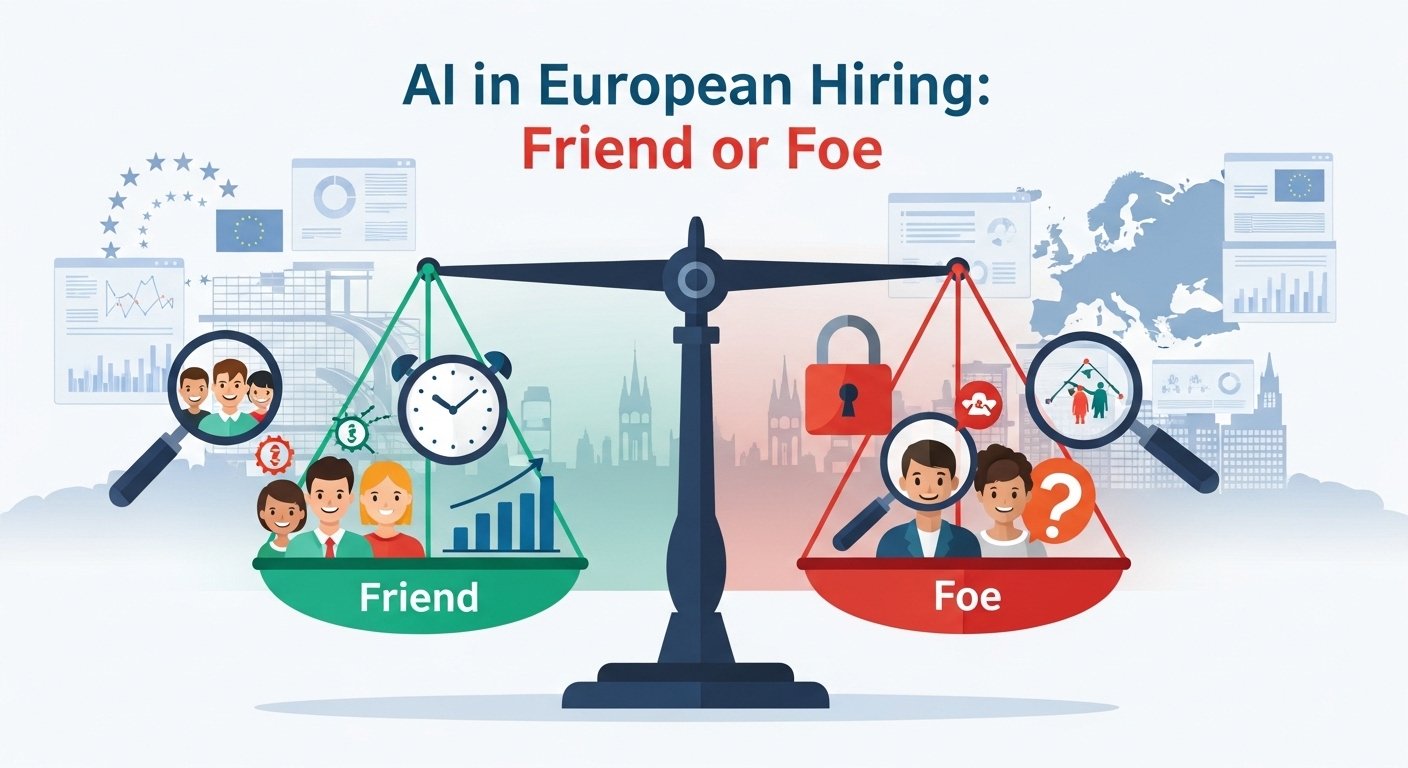
From a corporate standpoint, reduces recruitment costs by minimizing manual work and shortening hiring cycles. It improves scalability for organizations experiencing rapid growth. However, implementing compliant AI systems in Europe requires significant investment. Legal consultations, auditing processes, and technology upgrades can increase expenses. Despite these challenges, many companies view as a long-term investment in efficiency and competitiveness.
The Future of Artificial Intelligence in European Hiring
Looking ahead, will likely become even more integrated into European hiring processes. Advancements in natural language processing, predictive hiring analytics, and behavioral assessment tools will enhance recruitment accuracy. At the same time, regulatory frameworks will continue to evolve. The balance between innovation and protection will shape the trajectory of AI adoption. European organizations that prioritize transparency, fairness, and compliance will be best positioned to leverage effectively. Ultimately, whether is a friend or foe depends on how responsibly it is implemented.
Conclusion
Artificial Intelligence is neither purely a friend nor entirely a foe for hiring in Europe today. It offers undeniable advantages in efficiency, scalability, and data-driven decision-making. At the same time, it presents significant challenges related to bias, transparency, and data protection. Europe’s strong regulatory framework, including the General Data Protection Regulation and the EU AI Act, aims to ensure that Artificial Intelligence in recruitment aligns with ethical and legal standards.
The future of hiring in Europe will likely depend on a balanced approach—one that combines technological innovation with human oversight. When implemented responsibly, Artificial Intelligence can be a powerful ally in building diverse, efficient, and forward-thinking workplaces. But without careful governance, it risks undermining fairness and trust. The true answer lies not in whether Artificial Intelligence is inherently good or bad, but in how Europe chooses to shape its role in the world of work.
FAQs
Q; Is Artificial Intelligence widely used in European hiring today?
Yes, many European companies use Artificial Intelligence for resume screening, candidate matching, and interview scheduling. However, usage varies by industry and company size.
Q; How does the EU AI Act affect recruitment?
The EU AI Act classifies recruitment AI systems as high-risk, requiring strict compliance measures, risk assessments, and human oversight.
Q;Can Artificial Intelligence eliminate hiring bias?
Artificial Intelligence can reduce certain biases through structured evaluations, but it can also replicate existing biases if trained on flawed data.
Q; Is AI-based hiring compliant with GDPR?
AI-based hiring can be compliant with GDPR if organizations ensure lawful data processing, transparency, and candidate rights protection.
5. Will Artificial Intelligence replace human recruiters in Europe?
It is unlikely. Artificial Intelligence typically supports recruiters rather than replacing them, combining efficiency with human judgment for better outcomes.
