

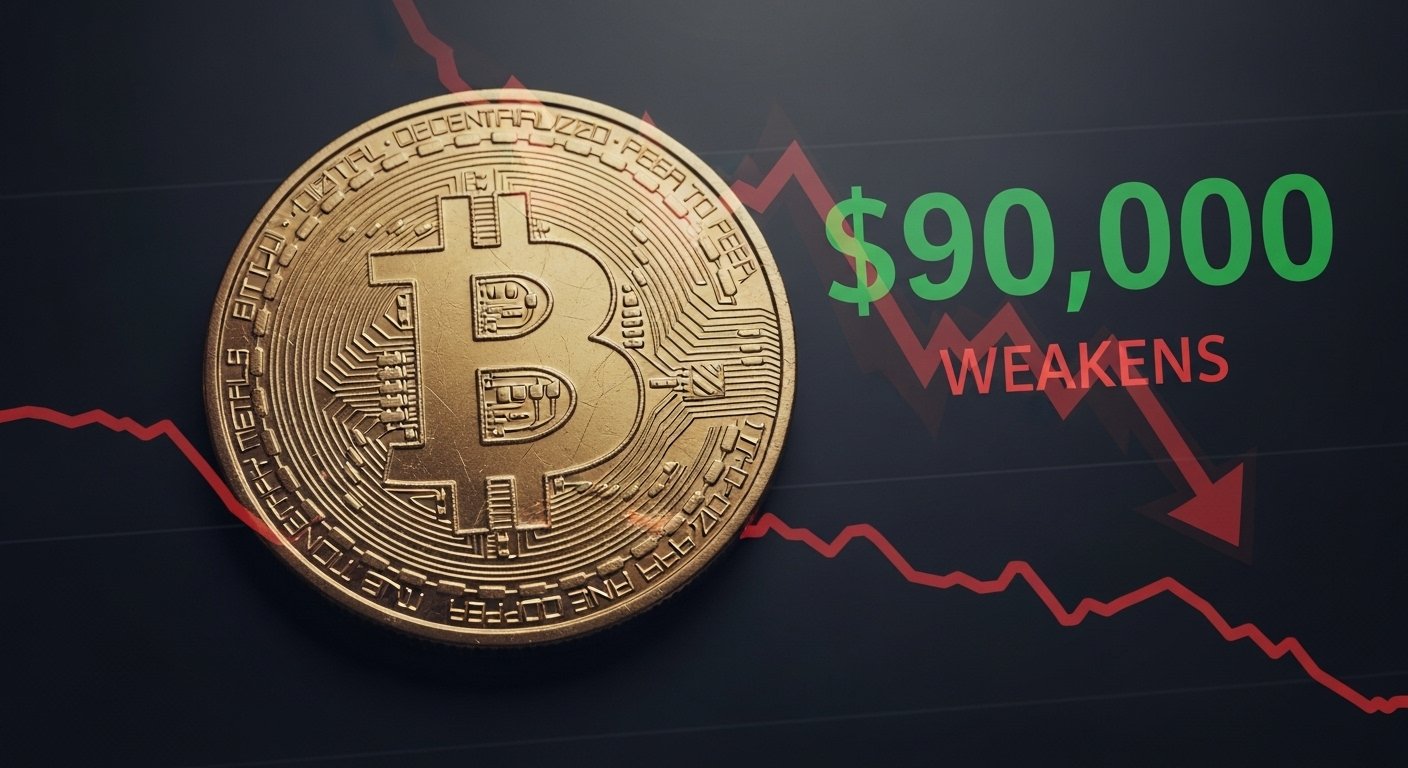
Bitcoin $90K Weakens reclaiming the $90,000 level has been treated as an inevitability rather than a question. Traders, analysts, and long-term holders alike viewed it as the next logical milestone in a broader bullish structure. However, as the crypto market matures and derivatives activity deepens, psychological price levels alone are no longer enough to dictate direction.
As a massive $8.8 billion options expiry approaches, the narrative around Bitcoin price action is shifting. Instead of optimism and momentum, the market is now defined by caution, hedging behavior, and consolidation. Bitcoin’s failure to stay close to $90,000 has reduced the level’s short-term influence, turning what once acted as a price magnet into a distant resistance zone.
This change is not happening in isolation. Options markets play an increasingly dominant role in shaping short-term price movements, particularly during major expirations. With billions in contracts nearing settlement, traders are reassessing risk, volatility expectations, and directional conviction. As a result, Bitcoin’s pull toward $90,000 has weakened, replaced by a more complex interplay of market mechanics and sentiment.
In this article, we explore why $90,000 is losing relevance, how the looming options expiry affects Bitcoin’s structure, what derivatives data reveals about trader psychology, and what scenarios may unfold once the contracts expire.
Understanding the $8.8 Billion Bitcoin Options Expiry
An options expiry represents the moment when derivative contracts either settle or expire worthless. While smaller expiries often pass quietly, large-scale events can influence price behavior due to forced hedging, repositioning, and liquidity shifts.
In this case, the combined expiry value of $8.8 billion is substantial by any standard. The majority of that exposure is concentrated in Bitcoin options, making BTC the focal point of market attention. When such a large amount of open interest unwinds simultaneously, the impact can ripple through both derivatives and spot markets.
This expiry is particularly notable because it marks a major monthly settlement early in the year. Institutional traders frequently use these periods to rebalance portfolios, close outdated strategies, or establish new directional bets. As contracts near expiration, short-term volatility often increases—not necessarily because of new information, but because existing positions must be resolved.
The sheer scale of this expiry means traders are less willing to take aggressive positions ahead of time. Instead, many are choosing to hedge, reduce exposure, or wait for clarity after settlement. This behavior alone can suppress momentum and weaken upside narratives like the push toward $90,000.
Why $90,000 Is Losing Its Psychological Grip on Bitcoin
Round-number price levels carry psychological weight, especially in retail-driven markets. However, Bitcoin has evolved into an asset class where derivatives positioning often overrides emotional price targets.
The $90,000 level remains significant, but its influence has diminished because Bitcoin has spent extended time trading well below it. When price fails to approach a level consistently, it loses its magnetic effect. Traders stop positioning for an imminent breakout and instead treat the level as overhead resistance.

This shift matters because market psychology adapts quickly. When $90,000 was within reach, it framed expectations and encouraged bullish risk-taking. Now, with Bitcoin consolidating at lower levels, the conversation has changed. Traders are more focused on protecting downside risk and preserving capital than chasing upside targets.
In addition, options data suggests that many market participants no longer expect a near-term surge to $90,000. Instead, positioning reflects uncertainty, range trading, and defensive strategies. This collective mindset weakens the level’s ability to influence short-term price action.
Max Pain and Its Role in Bitcoin Options Markets
One of the most discussed concepts during options expiries is max pain—the price point at which the greatest number of options contracts expire worthless. While often misunderstood, max pain can offer insight into where market pressure may concentrate near expiration.
In this cycle, the max pain level for Bitcoin options sits near $90,000. Under ideal conditions, price might gravitate toward that level as expiry approaches. However, max pain is not a force of nature. Its influence depends heavily on proximity.
When Bitcoin trades far below the max pain zone, the effect weakens dramatically. The distance between spot price and max pain reduces the likelihood of price being “pulled” upward through hedging flows alone. Instead, closer strike levels begin to matter more.
This explains why $90,000 has lost short-term relevance. While it remains an important macro level, the market’s immediate focus has shifted to nearer price zones where liquidity, stop orders, and option strikes are clustered.
Reading Market Sentiment Through Put-to-Call Ratios
The put-to-call ratio is commonly used to gauge trader sentiment in options markets. A lower ratio typically suggests bullish expectations, while a higher ratio points to bearish positioning. However, in crypto markets, interpretation requires nuance.
Current options data shows a greater number of call contracts relative to puts, which might appear bullish at first glance. However, not all calls represent speculative upside bets. Many traders sell calls as part of income-generating strategies, while others use them to hedge existing spot holdings.
At the same time, demand for protective puts has increased. This indicates that traders are willing to pay for downside insurance, even while maintaining long-term bullish exposure. The result is a market that looks optimistic structurally but cautious behaviorally.
This mixed sentiment aligns with Bitcoin’s sideways price action. Traders are not abandoning bullish views, but they are no longer confident enough to push aggressively toward $90,000 ahead of a major expiry.
Implied Volatility: Calm on the Surface, Risk Beneath
Implied volatility is often viewed as a measure of expected market movement. When it declines, markets are assumed to be stable. However, falling volatility can sometimes be deceptive—especially before major structural events like options expiries.
In the current environment, implied volatility has trended lower, reinforcing the perception of consolidation. While this suggests reduced expectations for dramatic price swings, it can also signal complacency.
Low volatility environments are vulnerable to sudden disruptions. When positioning is crowded and liquidity thins, even modest catalysts can produce outsized moves. Options expiry itself can act as such a catalyst, forcing rapid repositioning once contracts settle.
For Bitcoin, this means that the absence of volatility should not be mistaken for safety. Instead, it highlights the importance of understanding market structure rather than relying solely on surface-level indicators.
Dealer Hedging and Its Influence on Short-Term Bitcoin Price Action
Options markets influence spot prices through dealer hedging activity. When dealers hold large options positions, they adjust their exposure dynamically as price moves, which can either dampen or amplify volatility.
As expiration approaches, hedging sensitivity increases. Small price changes can trigger significant adjustments, particularly near heavily traded strike prices. This dynamic can create temporary “pinning” effects or sudden bursts of momentum.
However, these effects are highly situational. They depend on where Bitcoin trades relative to major strikes and whether dealers are net long or short volatility. This complexity is why expiry-driven price movements often appear unpredictable.
What matters most is not the direction of the move, but the temporary nature of these effects. Once expiry passes and positions reset, Bitcoin often returns to trading based on broader fundamentals and sentiment.
Post-Expiry Scenarios for Bitcoin
As the options expiry concludes, several plausible scenarios could unfold, each shaped by how traders reposition afterward.
One possibility is a short-term relief rally. With hedges removed and uncertainty resolved, Bitcoin could attempt a rebound. In this case, $90,000 would re-emerge as a key resistance level, though reclaiming it would likely require additional catalysts.
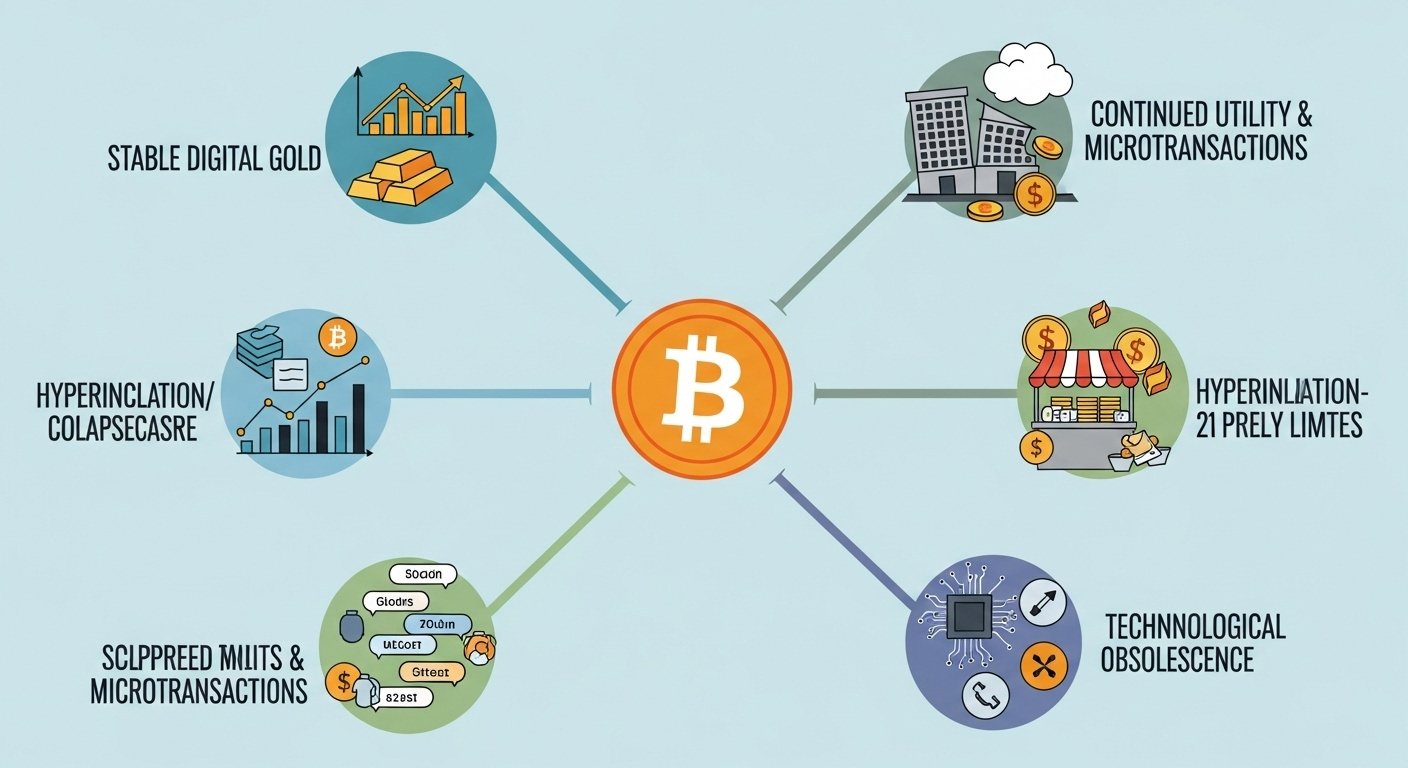
Another scenario is continued consolidation. If macro conditions remain unchanged and spot demand stays muted, Bitcoin may continue trading within a defined range. This outcome would reinforce the idea that $90,000 is no longer an immediate objective.
A third scenario involves renewed downside pressure. If bearish positioning dominates post-expiry or broader risk sentiment deteriorates, Bitcoin could test lower support levels. In this case, the loss of the $90,000 narrative would become even more pronounced.
Implications for Short-Term Traders
For active traders, options expiry represents both opportunity and risk. Increased volatility can create profitable setups, but it also raises the likelihood of false breakouts and whipsaw movements.
Understanding where key option strikes and liquidity zones sit can help traders avoid emotional decisions. Rather than chasing headlines, successful short-term strategies focus on structure, volume, and confirmation after expiry.
Patience is often rewarded during these periods. Allowing the market to reveal its post-expiry direction can reduce unnecessary losses and improve trade quality.
What Long-Term Bitcoin Holders Should Take Away
For long-term investors, options expiry is less about timing entries and more about interpreting sentiment. Defensive positioning, increased hedging, and weakening psychological levels suggest caution—but not necessarily a bearish outlook.
Bitcoin’s long-term thesis remains intact, but short-term dynamics are clearly influencing price behavior. Recognizing these cycles can help investors stay grounded during periods of uncertainty and avoid overreacting to temporary volatility.
The fading pull of $90,000 does not mean it is irrelevant. It simply means the market needs stronger conviction before treating it as the next destination.
Conclusion
The weakening influence of $90,000 highlights how much the Bitcoin market has evolved. Price action is no longer driven solely by optimism or round-number milestones, but by derivatives positioning, risk management, and liquidity dynamics.
As the $8.8 billion options expiry approaches, caution has replaced momentum. Traders are hedging, volatility is compressed, and upside expectations are being reassessed. In this environment, $90,000 has shifted from a near-term target to a longer-term objective.
Once expiry passes, Bitcoin will have the opportunity to reset. Whether it regains strength or remains range-bound will depend on spot demand, macro conditions, and renewed conviction—not on psychological levels alone.
FAQs
Q: Why does a large options expiry affect Bitcoin price?
Large expiries force traders and dealers to settle or roll positions, which can trigger hedging flows and short-term volatility in both derivatives and spot markets.
Q: What does it mean when $90,000 “loses its pull”?
It means traders no longer expect Bitcoin to reach that level in the near term, reducing its influence on positioning and market psychology.
Q: Is max pain a reliable predictor of Bitcoin price?
Max pain is a reference point, not a guarantee. Its influence depends on how close Bitcoin trades to that level and overall market conditions.
Q: Why can volatility increase even when implied volatility is low?
Low implied volatility can hide underlying positioning risks. Structural events like options expiry can still trigger sharp moves.
Q: Should long-term investors worry about options expiry?
Not necessarily. Options expiry mainly affects short-term price behavior. Long-term holders should focus on broader trends rather than temporary volatility.
