


Crypto Sentiment Slips start whipping around and timelines fill with doom posts, it’s rarely just about charts. It’s about crypto sentiment—the collective mood of traders, long-term holders, and institutions trying to make sense of uncertainty in real time. Right now, crypto sentiment is faltering as the Fear Index lingers near extreme levels, a signal that anxiety is dominating decision-making. In these conditions, fear can become self-reinforcing: traders sell because others are selling, volatility rises because liquidity thins, and every headline feels like confirmation that the market is “broken.” But history shows something more nuanced. Extreme fear has often appeared near important turning points, though it can also persist longer than people expect, grinding confidence down day after day.
Understanding crypto sentiment is not about predicting tomorrow’s candle with perfect precision. It’s about reading the emotional regime of the market and adjusting expectations accordingly. Markets behave differently when fear is high. Rallies tend to be sold quickly, bad news gets amplified, and risk appetite collapses. In contrast, when crypto sentiment is strong, dips get bought, leverage expands, and traders treat every pullback as an opportunity. The problem is that most participants only recognize the regime after they’ve been punished by it.
This is where sentiment tools—especially the Crypto Fear & Greed Index and related measures—become useful. They help translate messy human emotion into a structured signal. If the Fear Index is hovering near extreme levels, it suggests that crypto sentiment is skewed toward caution, defensiveness, and short-term survival. That doesn’t automatically mean “buy,” and it doesn’t automatically mean “sell.” It means the market is psychologically fragile, and fragility changes everything: how fast price moves, how long trends persist, and what kind of stories people will believe.
In this article, we’ll unpack why crypto sentiment weakens when fear stays elevated, what drives the Fear Index into extreme territory, how to interpret these conditions without falling into traps, and what signals can help you spot stabilization. If you want to navigate a fearful market without getting emotionally dragged around, you need more than hope—you need a framework.
What the Fear Index Really Measures
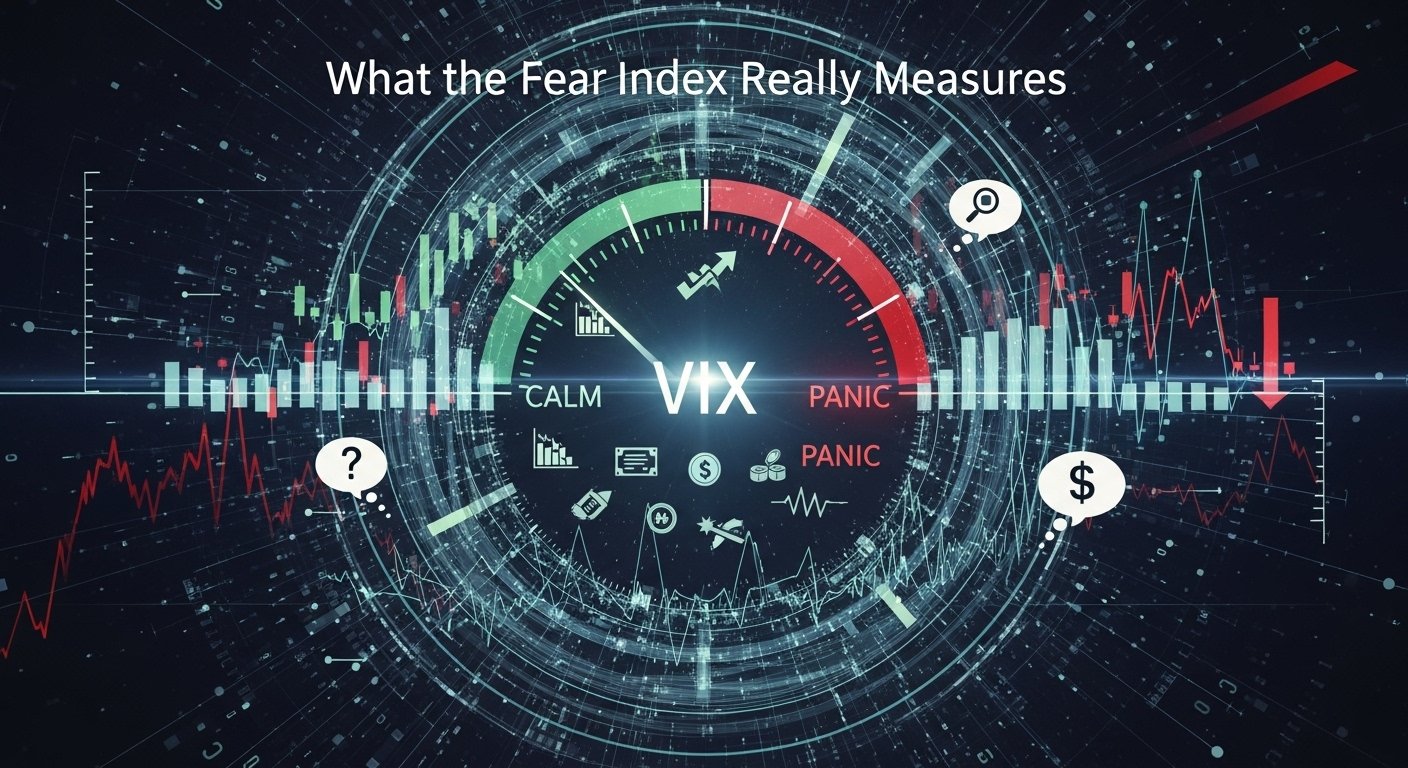
The Fear Index, most commonly referenced through the Crypto Fear & Greed Index, is designed to approximate the emotional state of the crypto market. It typically blends signals such as price momentum, volatility, social media activity, market dominance, and broader market behavior into a single score that ranges from fear to greed. When the index lingers near extreme levels, it indicates that crypto sentiment is heavily pessimistic and that participants are behaving more like risk managers than risk takers.
Why Extreme Fear Hits Crypto Harder Than Other Markets
Crypto is structurally prone to sentiment extremes because it trades nonstop, attracts a large retail audience, and often runs on narratives that shift quickly. Traditional markets have circuit breakers, regular trading hours, and deeper institutional liquidity. Crypto has fewer speed bumps. When crypto sentiment breaks down, cascades can happen fast, especially if leverage is high and liquidation levels are clustered.
Another reason extreme fear matters more in crypto is that a large share of market value is tied to expectations—future adoption, future utility, future regulation clarity. When the crowd gets scared, the market doesn’t just reprice assets; it reprices stories. That’s why market psychology is so powerful here. In fearful conditions, people stop asking, “What is this worth in five years?” and start asking, “What if this goes down another 30% this week?”
The Danger of Treating the Index Like a Crystal Ball
A key mistake is assuming a low Fear Index is an immediate buy signal. Extreme fear can mark capitulation, but it can also reflect genuine structural stress: tightening financial conditions, regulatory shocks, exchange failures, or broader macro risk. The index is best used as a context tool. It tells you what kind of market you’re in—one where crypto sentiment is fragile—so you can set appropriate tactics, time horizons, and risk controls.
Why Crypto Sentiment Falters When Fear Stays High
A single scary day can be shrugged off. Weeks of elevated fear are different. When the Fear Index lingers near extreme levels, it changes behavior across the board, weakening crypto sentiment not just among traders, but across the ecosystem.
Confidence Erodes Through Repetition
Fear that persists becomes a habit. Traders begin expecting downside, so they position for it. They sell rallies, reduce exposure, and keep tight stops. Long-term holders hesitate to add, even if they believe in fundamentals, because they don’t want to feel foolish if the market continues falling. Over time, this creates a feedback loop: weak demand leads to weaker price action, which reinforces weak crypto sentiment.
Liquidity Thins and Volatility Expands
Fearful markets tend to have thinner order books. Market makers widen spreads, and large players become more selective. With less liquidity, even modest selling can push price significantly lower. This amplifies volatility, which then feeds back into the Fear Index and into crypto sentiment. Traders see sharp moves and interpret them as instability, which encourages them to step back further.
Narratives Turn Defensive
In greedy markets, narratives are expansive: innovation, adoption, and “we’re early.” In fearful markets, narratives become defensive: survival, risk, and “this time is different.” People focus on worst-case scenarios and highlight negative catalysts. Even neutral news can be interpreted bearishly. This narrative shift is a hallmark of weakened crypto sentiment, and it can last until price action proves otherwise for long enough to rebuild trust.
Common Catalysts That Push the Fear Index Toward Extremes
Extreme fear rarely appears without fuel. Understanding the drivers helps you evaluate whether fear is mostly emotional, mostly structural, or a blend of both—an important distinction for interpreting crypto sentiment.
Crypto Sentiment Slips Macro Uncertainty and Tight Liquidity
Crypto is highly sensitive to global liquidity conditions. When interest rates are high or credit is tight, speculative appetite fades. In these moments, risk appetite in crypto often collapses faster than in equities because crypto is still viewed as a high-beta risk asset. If macro uncertainty dominates the headlines, the market can remain in a fear regime for longer than most expect, keeping crypto sentiment subdued.
Regulatory Shocks and Legal Overhang
Regulatory actions can trigger fast shifts in crypto sentiment because they introduce uncertainty about what’s allowed, what’s restricted, and which business models will survive. Even rumors of enforcement can cause defensive positioning. When legal clarity is absent, fear can linger simply because participants don’t know how to price future constraints.
Leverage Unwinds and Liquidation Cascades
A sudden drop can liquidate leveraged longs, which accelerates selling and creates chain reactions. These events often feel like “panic,” and they can produce extreme Fear Index readings quickly. Importantly, a leverage flush can also be cleansing. If the market clears crowded leverage, it may become more stable afterward—even if crypto sentiment takes time to recover.
Exchange, Custody, or Stablecoin Stress
Crypto runs on trust in infrastructure: exchanges, custodians, bridges, and stablecoins. When that trust wobbles, fear spikes. People prioritize safety over upside. Withdrawals rise, stablecoin premiums/discounts can appear, and on-chain data may show movements into cold storage. These are all symptoms of crypto sentiment shifting from opportunity-seeking to capital preservation.
Reading Crypto Sentiment Beyond the Fear Index
The Fear Index is a convenient snapshot, but it’s not the whole story. To understand crypto sentiment with more depth, you need a few complementary lenses that capture positioning, conviction, and stress.
On-Chain Signals That Reflect Conviction
On-chain data can help distinguish between panic selling and strategic repositioning. For example, if long-term holders are largely holding steady while short-term holders capitulate, that suggests fear is concentrated among weaker hands. If, however, you see broad distribution from older wallets, that can imply deeper confidence damage in crypto sentiment.
Another useful lens is exchange flows. Heavy inflows to exchanges can signal intent to sell, while persistent outflows can indicate accumulation and long-term storage. Neither is a guaranteed predictor, but combined with the Fear Index, these signals can add texture to what crypto sentiment is actually doing beneath the surface.
Funding Rates, Open Interest, and Derivatives Stress
Derivatives can reveal when traders are leaning too far in one direction. Deeply negative funding can indicate crowded shorts or strong hedging demand, both associated with fearful crypto sentiment. Rising open interest during falling prices can signal risk building up; falling open interest after a dump can signal a reset. Watching how these metrics evolve during extreme fear can help you spot whether stress is escalating or easing.
Dominance, Breadth, and Rotation
When fear dominates, money often concentrates into perceived “safer” large-cap assets, and market breadth deteriorates. If fewer coins participate in rallies, it suggests crypto sentiment remains cautious. Conversely, when fear begins to loosen its grip, you often see improving breadth and selective rotation into higher-beta segments. That transition can be an early clue that crypto sentiment is stabilizing, even before headlines turn positive.
How Markets Behave When Fear Stays Extreme
Knowing the behavioral patterns of fearful markets helps you avoid misreading normal fear-regime moves as “proof” that the market is recovering or collapsing.
Relief Rallies Are Common—and Often Misleading
In extreme fear, markets can snap upward quickly on short covering, bargain hunting, or simply the absence of fresh bad news. These moves can feel like the start of a new bull run, but they often fade because crypto sentiment is still damaged and participants are eager to reduce exposure into strength. A hallmark of a fear regime is that rallies meet supply quickly.
Bad News Has More Power Than Good News
In an optimistic market, traders discount negative headlines and focus on the long-term narrative. In a fearful market, the opposite happens. Even good news can be ignored. This asymmetry is why crypto sentiment can remain weak even after price stabilizes. The crowd needs repeated evidence that downside risk is shrinking before it emotionally re-engages.
Correlation Spikes and Diversification Fails
During stressful periods, many assets move together. Correlations rise, and “diversified” portfolios can still feel like a single bet. This is another reason crypto sentiment can degrade: people realize that their altcoin basket doesn’t protect them when fear dominates the entire market.
Practical Ways to Navigate a Fearful Crypto Sentiment Regime
This is not financial advice, but there are practical, risk-aware ways to approach a market where crypto sentiment is fragile and the Fear Index remains near extremes. The goal is not heroism; it’s survivability and clarity.
Shift From Prediction to Process
Fear regimes punish prediction. Instead of trying to call the exact bottom, focus on a repeatable process: define risk limits, identify conditions that would change your view, and stick to sizing that allows you to stay rational. When crypto sentiment is weak, your biggest enemy is often your own reaction to noise.
Use Time Horizon as a Risk Tool
One of the simplest ways to reduce emotional pressure is to align your actions with your time horizon. Short-term traders need strict risk controls because volatility is elevated. Longer-term participants can reduce stress by focusing on incremental accumulation rather than all-in decisions. In both cases, acknowledging the state of crypto sentiment helps you choose strategies that fit the environment.
Watch for Stabilization Signals, Not “Good Vibes”
The recovery of crypto sentiment usually starts quietly. You may see volatility compress, downside follow-through weaken, and sell-offs get bought more consistently. You may also notice that the market stops reacting violently to negative headlines. These are signs that fear is losing its grip. It’s less about a single bullish event and more about a gradual change in how the market behaves.
What Could Improve Crypto Sentiment From Here?
Because this article isn’t tied to a single day’s reading, the more useful question is structural: what kinds of developments typically pull crypto sentiment out of an extreme fear zone?
Clearer Macro Backdrop
If the broader economic environment becomes more predictable—whether through easing inflation pressures, improved liquidity conditions, or reduced systemic risk—crypto often benefits disproportionately. A calmer macro tape can give crypto sentiment room to rebuild.
Fewer Systemic “Unknowns” Inside Crypto
When major infrastructure concerns fade—exchange stability, stablecoin confidence, custody reliability—participants are more willing to take risk again. Fear doesn’t vanish overnight, but the market needs fewer reasons to imagine worst-case scenarios for crypto sentiment to recover.
Stronger Price Structure and Higher Quality Demand
Ultimately, sentiment follows behavior. If the market starts making higher lows, reclaiming key levels, and showing real demand rather than short squeezes, crypto sentiment improves naturally. This kind of recovery tends to be slower, but it’s more durable.
Conclusion
When the Fear Index lingers near extreme levels, it’s a loud signal that crypto sentiment has shifted into a defensive, fragile state. In this regime, volatility is amplified, rallies can be fleeting, and narratives skew toward worst-case thinking. The Fear Index is not a fortune teller, but it is a valuable context tool—especially when combined with on-chain data, derivatives positioning, and market breadth.
The most effective approach in an extreme-fear environment is to respect what the market is telling you: uncertainty is high, reactions are exaggerated, and emotions can override logic. By focusing on process, aligning actions with time horizon, and watching for stabilization signals rather than hype, you can navigate weak crypto sentiment with far less stress. Fear may dominate today, but markets are cyclical, and sentiment regimes change—often when the crowd least expects it.
FAQs
Q: Does extreme fear always mean it’s time to buy?
Not always. Extreme fear shows that crypto sentiment is very negative, which can create long-term opportunity, but fear can persist if there are real structural problems. It’s better to treat extreme fear as a “high caution, high potential” zone rather than an automatic buy signal.
Q: What is the best way to use the Crypto Fear & Greed Index?
Use it to understand context. When the Crypto Fear & Greed Index is low, expect fragile crypto sentiment, thinner liquidity, and sharper moves. Pair it with price structure, volatility behavior, and positioning metrics to avoid overreacting to a single score.
Q: How can I tell if crypto sentiment is improving?
Look for changes in market behavior: reduced downside follow-through, improved breadth, volatility compression, and less dramatic reactions to negative news. When crypto sentiment improves, rallies tend to hold better and dips are bought more consistently.
Q: Which indicators complement the Fear Index the most?
On-chain data (exchange flows, long-term holder behavior), derivatives signals (funding rates, open interest), and market breadth/dominance are strong complements. Together they show whether weak crypto sentiment is driven by panic, leverage stress, or deeper distribution.
Q: Why does crypto sentiment swing so wildly compared to stocks?
Crypto trades 24/7, is more narrative-driven, and often has higher leverage participation and thinner liquidity. Those factors make emotional shifts faster and more intense, which is why crypto sentiment can move from greed to fear—and back—more dramatically than in many traditional markets.
Also Read: Three Crypto Takeaways From the World Economic Forum
