


Davos 2026 is shaping up to be more than another high-level gathering of policymakers, CEOs, investors, and technologists. For years, digital assets have oscillated between hype cycles and hard resets, while blockchain finance has fought to prove it can deliver real-world efficiency, transparency, and trust at scale. What makes Davos 2026 feel different is the convergence of forces that typically arrive separately: clearer policy direction, maturing infrastructure, stronger institutional readiness, and an economic climate that rewards efficiency and programmable value.
In past cycles, crypto markets often moved faster than the rules and rails needed to support mass adoption. That mismatch created volatility, confusion, and plenty of skepticism. Yet the past few years have also forced the industry to grow up. Custody standards improved, on-chain analytics matured, compliance tooling expanded, and enterprises began moving beyond pilots into production-grade experiments. At the same time, banks and asset managers started treating digital assets less like a curiosity and more like a strategic capability—especially as tokenization, stablecoins, and regulated market structures developed.
Davos 2026 matters because Davos is where narratives crystallize into agendas. When the language shifts from “Should we?” to “How do we implement safely?” you can feel a market turning. Davos 2026 is poised to spotlight that shift across digital assets and blockchain finance, not as a rebellion against traditional finance, but as its next operating system upgrade. If 2024 and 2025 were about rebuilding trust and strengthening foundations, Davos 2026 could be where mainstream finance fully commits to integrating digital assets into everyday capital markets, payments, and treasury operations.
Most importantly, Davos 2026 could be the year blockchain finance stops being framed as a niche “crypto” story and starts being understood as infrastructure for modern finance—where smart contracts, programmable compliance, and tokenization improve speed, settlement, and access. That’s why Davos 2026 may mark the breakthrough year for digital assets and blockchain finance: the incentives, the tooling, and the governance are finally aligning.
What makes Davos 2026 different from earlier digital asset turning points
Davos 2026 stands out because it arrives after a long period of stress-testing. Markets have experienced booms and busts, regulators have intensified scrutiny, and institutions have demanded higher standards. In many industries, breakthroughs happen not at peak excitement, but after systems are forced to mature under pressure. Davos 2026 is positioned at that kind of inflection point for digital assets and blockchain finance.
A macro environment that rewards efficiency and transparency
In a world of tighter margins, higher compliance expectations, and persistent operational complexity, financial institutions are increasingly attracted to systems that reduce reconciliation, shorten settlement times, and improve auditability. Blockchain finance—when designed responsibly—offers precisely that: shared ledgers, automated workflows, and traceable movements of value. Davos 2026 is likely to emphasize these pragmatic benefits rather than ideological debates about decentralization. When cost-of-capital concerns meet the promise of automated settlement, digital assets begin to look less speculative and more infrastructural.
Institutional readiness is no longer theoretical
A key reason Davos 2026 could be pivotal is that institutions now have more of the missing pieces: regulated custody, risk frameworks, clearer governance, and mature vendor ecosystems. Banks, brokers, and asset managers that once “watched from the sidelines” have been building internal teams, experimenting with security tokens, exploring real-world assets on-chain, and learning where traditional controls can map onto blockchain finance. Davos 2026 may be where that quiet work becomes public commitment, as firms compete to be seen as leaders in digital assets rather than laggards.
Regulation at Davos 2026: from ambiguity to usable frameworks

No breakthrough year for digital assets is possible without a workable regulatory environment. The shift that Davos 2026 could highlight is not “regulation versus innovation,” but regulation as a scaling mechanism. When rules are unclear, institutions avoid exposure. When rules become consistent, markets professionalize, liquidity deepens, and product design improves.
Policy clarity enables investment-grade blockchain finance
The most meaningful regulatory progress is rarely about a single headline. It’s about clearer definitions, licensing pathways, disclosure standards, and enforceable consumer protections. Davos 2026 is likely to feature discussions on harmonizing AML/KYC requirements, supervising stablecoin reserves, managing custody risk, and defining market conduct for tokenized instruments. That kind of policy infrastructure encourages responsible growth by making it easier for compliant actors to participate—and harder for bad actors to thrive.
A global approach to stablecoins, tokenization, and compliance
Blockchain finance does not stop at borders, but regulation often does. Davos 2026 could push the conversation toward interoperability not only in technology, but also in policy: how to treat stablecoins in cross-border payments, how to recognize tokenized securities across jurisdictions, and how to coordinate enforcement without stifling innovation. If Davos 2026 helps advance mutual recognition frameworks or common standards for disclosures and reserve attestations, the impact on digital assets could be immediate and measurable.
Tokenization and real-world assets: the most practical on-ramp to adoption
If one theme is likely to dominate blockchain finance at Davos 2026, it’s tokenization—especially tokenization of real-world assets. Tokenization has moved from a concept to a serious strategic track for major financial institutions because it speaks the language of finance: liquidity, settlement, collateral efficiency, and fractional ownership.
Why tokenization is bigger than “putting assets on a blockchain”
Tokenization is not just the digitization of an asset; it’s the redesign of how ownership, transfer, and compliance are handled. With the right structure, tokenized assets can embed rules directly into the instrument through smart contracts: who can hold it, how it transfers, what disclosures are required, and how corporate actions are processed. Davos 2026 may showcase how tokenization reduces the need for manual reconciliation and fragmented record-keeping—especially in private markets and complex instruments where settlement and reporting are expensive.
Private credit, funds, and collateral are prime candidates
Tokenizing real-world assets is particularly compelling in areas like private credit, private equity funds, and structured products where market infrastructure is often slower and more opaque than public markets. Blockchain finance can improve transparency, automate reporting, and enable more flexible collateral management. At Davos 2026, expect stronger narratives about tokenized funds, tokenized treasuries, and tokenized collateral that can move across platforms with programmable compliance. This is where digital assets become a tool for financial modernization rather than a standalone asset class.
Stablecoins and payments: the mainstream use case Davos 2026 can’t ignore
Payments are where blockchain finance can touch everyday life most directly, and Davos 2026 is likely to reflect that reality. While not every consumer wants to “use crypto,” many businesses want faster settlement, cheaper cross-border transfers, and improved treasury visibility. Stablecoins—when properly regulated and transparently backed—offer a bridge between traditional money and blockchain-native workflows.
Cross-border payments and treasury efficiency
Cross-border payments remain slow and costly, especially for businesses operating in multiple currencies and jurisdictions. Stablecoins can support near-real-time settlement and reduce the reliance on intermediary networks. Davos 2026 may elevate case studies where stablecoin rails improve treasury operations, automate supplier payments, or streamline remittances. The key shift is that blockchain finance becomes less about speculative trading and more about operational advantage.
The relationship between stablecoins and CBDCs
As central banks explore digital currency models, the ecosystem may evolve into a layered structure: central bank money, commercial bank money, and regulated stablecoins serving different roles. Davos 2026 could bring sharper clarity on how CBDCs might coexist with stablecoins, and how private-sector innovation can align with public-sector monetary stability. For digital assets, this coexistence matters because it legitimizes on-chain settlement as a core financial capability rather than an experiment.
DeFi meets TradFi: the rise of compliant, hybrid blockchain finance
A major storyline heading into Davos 2026 is not whether decentralized finance survives, but how it integrates into regulated finance. The next phase is less about replacing banks and more about adopting DeFi’s strongest ideas—automation, composability, and transparency—within risk-managed frameworks.
Compliant DeFi and institutional-grade protocols
Institutions care about predictable governance, risk controls, and enforceable compliance. That pushes blockchain finance toward models that incorporate permissioning, identity layers, and robust auditing. At Davos 2026, the discussion may center on “regulated DeFi” and “compliant liquidity”—systems where digital identity, AML/KYC, and policy enforcement coexist with efficient on-chain settlement. This is where digital assets evolve into programmable financial instruments that behave more like regulated products than unbounded experiments.
Lending, liquidity, and market structure modernization
DeFi demonstrated that lending and market-making can be automated, but it also revealed new risks: smart contract vulnerabilities, liquidity shocks, and governance failures. The hybrid model likely to be emphasized at Davos 2026 is one where institutions bring discipline—stress testing, disclosure standards, and risk monitoring—while using blockchain finance to automate operational layers. If Davos 2026 becomes the place where this hybrid model is normalized, it could unlock broader adoption of digital assets in capital markets.
Infrastructure maturity: identity, custody, and interoperability finally catch up
A breakthrough year requires boring reliability. The reason Davos 2026 could matter is that the foundational infrastructure behind blockchain finance has improved dramatically: safer custody, better monitoring, more robust developer tooling, and more thoughtful governance models.
Digital identity and compliance tooling become core rails
In early crypto markets, identity was often an afterthought. In institutional finance, identity and compliance are non-negotiable. Davos 2026 is likely to highlight how digital identity layers, verifiable credentials, and compliance automation can reduce friction while increasing trust. Instead of manual onboarding and periodic reviews, blockchain finance can support continuous compliance, where transactions are evaluated in real time using policy rules and on-chain analytics.
Interoperability reduces fragmentation
One of the biggest barriers to scaling digital assets is fragmented ecosystems: different chains, different standards, and inconsistent bridging. As interoperability improves—through standardized messaging, better settlement coordination, and stronger security models—blockchain finance becomes more usable for enterprises. Davos 2026 may spotlight interoperability as the hidden enabler behind tokenized markets and cross-border settlement, especially when regulated entities need predictable, auditable connectivity.
Custody and security practices move toward financial-grade standards
Custody remains the foundation of institutional participation. The more custody models mature—with segregation, insurance structures, robust key management, and clear operational controls—the easier it becomes for conservative capital to enter digital assets. Davos 2026 could accelerate confidence by emphasizing best practices in custody, governance, and cyber resilience as prerequisites for growth in blockchain finance.
AI, cybersecurity, and trust: why Davos 2026 will connect these dots
Davos 2026 will not discuss digital assets in isolation. Expect the conversation to connect blockchain finance with AI-driven risk management, cybersecurity, and data integrity. As financial systems become more automated, the challenge becomes ensuring that automation is safe, explainable, and resilient.
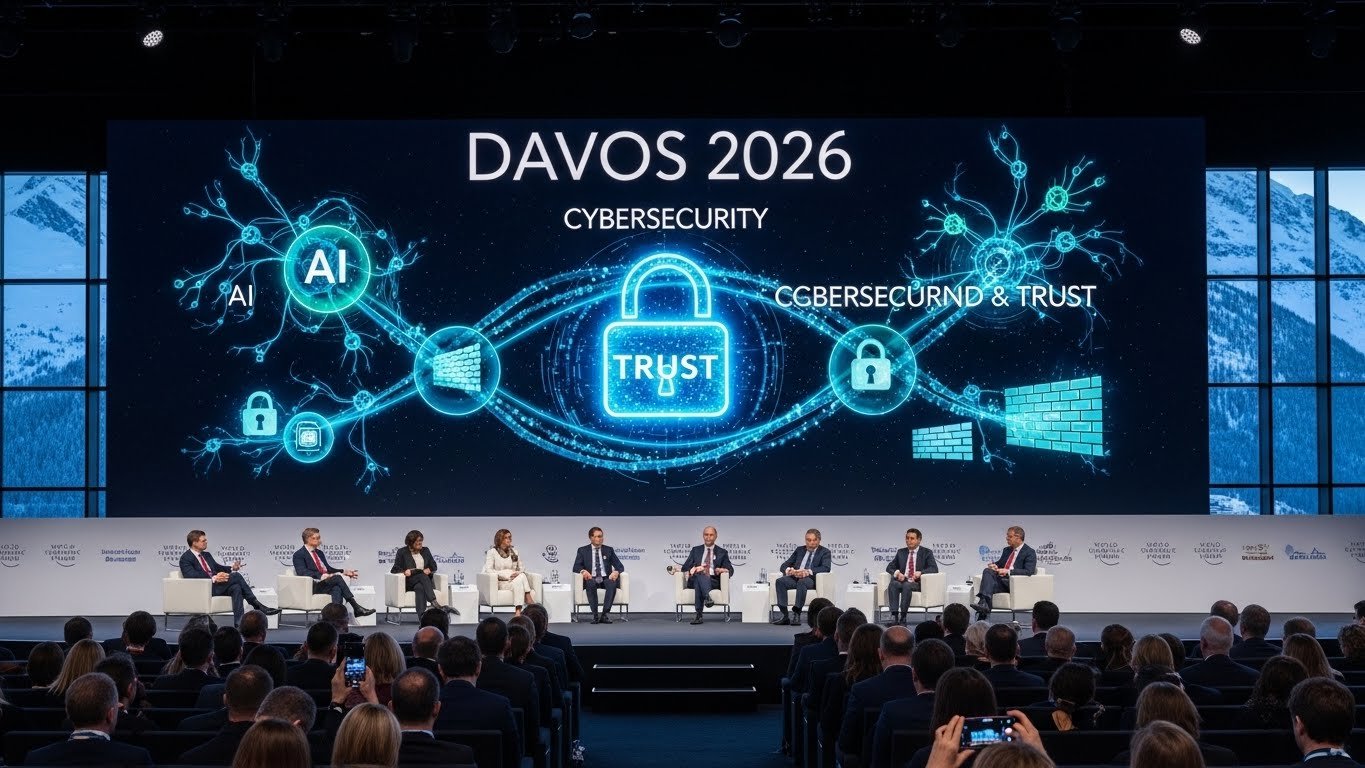
AI can help detect fraud patterns and monitor anomalies, but AI also increases the speed at which attacks can be executed. Blockchain finance, with transparent audit trails and programmable controls, can complement AI by providing reliable data provenance and immutable transaction history. Davos 2026 may frame this as a trust stack: AI for detection and prediction, blockchain for verifiable records, and policy frameworks for accountability. When these layers reinforce each other, digital assets become safer to integrate into mainstream finance.
Risks and constraints: why the breakthrough isn’t guaranteed
Even if Davos 2026 becomes the symbolic tipping point, real-world adoption depends on execution. Blockchain finance still faces hurdles that can slow progress if ignored.
The first is governance: unclear accountability for protocol upgrades, disputes, and operational failures can deter institutions. The second is security: smart contracts can fail, bridges can be attacked, and operational processes can break under stress. The third is user experience: if systems remain difficult to use, adoption stays limited to specialists. Davos 2026 will likely feature stronger emphasis on reducing these risks through audits, standards, and operational controls.
Another constraint is reputational overhang. Many decision-makers still associate digital assets with volatility and scandal. Davos 2026 can help reset the narrative, but the industry must continue proving that blockchain finance can meet the reliability and ethics expectations of global finance.
How businesses and investors can prepare for Davos 2026 and beyond
If 2026 is the breakthrough year, preparation is less about chasing hype and more about building readiness. Enterprises should focus on where blockchain finance delivers measurable ROI: settlement speed, collateral efficiency, cross-border treasury, and new distribution models via tokenization. Investors should focus on fundamentals: regulatory alignment, security posture, revenue models, and real adoption.
Organizations that benefit most from Davos 2026 momentum will likely be those that treat digital assets as a capability, not a gamble. That means developing internal expertise, selecting compliant partners, implementing robust governance, and running carefully scoped deployments that can scale. Blockchain finance rewards disciplined execution, especially when regulatory scrutiny and reputational risk remain high.
Conclusion
Davos 2026 may be remembered as the moment digital assets and blockchain finance crossed from promising innovation into mainstream financial infrastructure. The ingredients for a breakthrough year are finally aligning: stronger regulation, maturing custody and compliance, practical tokenization of real-world assets, and payment systems powered by regulated stablecoins. If earlier eras were defined by experimentation and volatility, Davos 2026 could define a new phase—one focused on integration, trust, and large-scale implementation.
The breakthrough is not automatic. It depends on secure engineering, responsible governance, and policy clarity that supports innovation without compromising stability. But if those conditions continue to improve, Davos 2026 could mark the tipping point where blockchain finance becomes a normal part of how money moves, how assets settle, and how markets operate—quietly, reliably, and at scale.
FAQs
Q: Why is Davos 2026 such a big deal for digital assets?
Davos 2026 matters because it can solidify mainstream narratives and institutional agendas. When global leaders treat digital assets and blockchain finance as implementation priorities—rather than speculative trends—it accelerates investment, partnerships, and regulatory coordination.
Q: What is tokenization, and why will it be central at Davos 2026?
Tokenization is the process of representing ownership of assets on a blockchain, often with rules enforced through smart contracts. It’s central because it improves settlement, transparency, and access—especially for real-world assets like funds, credit, and treasuries.
Q: Are stablecoins replacing banks in blockchain finance?
In most realistic models, stablecoins complement banks rather than replace them. They can improve settlement and cross-border payments while banks continue to provide credit, compliance infrastructure, and regulated financial services. Davos 2026 is likely to emphasize coexistence and integration.
Q: What does “DeFi meets TradFi” mean in 2026?
It means regulated institutions are adopting the efficiency of DeFi—automation, transparency, composability—while adding risk management, identity controls, and AML/KYC compliance. This hybrid approach can make blockchain finance more scalable and safer.
Q: What are the biggest risks that could slow a Davos 2026 breakthrough?
Key risks include smart contract vulnerabilities, fragmented interoperability, unclear governance, and inconsistent regulation. Managing custody, cybersecurity, and compliance at institutional standards is essential for digital assets to scale responsibly.
Also More: Blockchain Capital Markets Rewiring Rails for Financial Revolution
