


UAE Approves First Central has once again positioned itself at the forefront of global financial innovation by approving the first central bank-registered USD stablecoin in the country’s history. This landmark decision represents a significant shift in how digital assets, particularly stablecoins, are regulated, integrated, and trusted within a national financial system. While many countries continue to debate how to control or restrict stablecoins, the UAE has chosen a more forward-thinking path—embracing innovation while anchoring it firmly within regulatory oversight.
Stablecoins have become one of the most important components of the digital asset ecosystem. Unlike volatile cryptocurrencies, they are designed to maintain a stable value by being pegged to fiat currencies such as the U.S. dollar. Their growing use in payments, trading, remittances, and institutional settlement has made them impossible for regulators to ignore. The UAE’s approval of a USD-backed stablecoin registered with the central bank sends a clear message: digital finance is not a temporary trend, and regulation must evolve to support it responsibly.
This development is especially important because it moves stablecoins out of legal gray areas and into a structured regulatory environment. By granting official registration, the UAE has created a framework where innovation, compliance, and financial stability can coexist. For businesses, financial institutions, and everyday users, this approval may fundamentally change how digital dollars are used across the region.
Understanding Stablecoins and Their Role in Modern Finance
Stablecoins are digital tokens designed to mirror the value of a traditional currency, most commonly the U.S. dollar. They serve as a bridge between traditional finance and blockchain-based systems, offering the efficiency of digital transactions without the extreme price fluctuations associated with cryptocurrencies like Bitcoin or Ethereum. Over the years, stablecoins have become essential tools for traders, institutions, and fintech platforms seeking speed, liquidity, and reliability.
The global adoption of USD stablecoins has accelerated due to their ability to facilitate instant transfers, reduce cross-border transaction costs, and enable 24/7 settlement. However, their rapid growth has also raised concerns among regulators related to transparency, reserve backing, consumer protection, and systemic risk. Without clear oversight, stablecoins can pose challenges to financial stability—especially when used at scale.
The UAE’s approach recognizes both sides of this reality. Instead of banning or ignoring stablecoins, the country has chosen to regulate them directly. By approving a central bank-registered USD stablecoin, the UAE has laid the foundation for a more mature, transparent, and trustworthy digital asset ecosystem.
Why the UAE’s Approval Is a Historic First
What makes this announcement historic is not simply that a USD stablecoin has been approved, but that it has been registered with the central bank under a formal regulatory framework. This distinction sets it apart from many other jurisdictions where stablecoins operate without direct central bank acknowledgment or supervision.
Central bank registration implies that the stablecoin issuer must meet strict requirements related to governance, operations, and compliance. It also suggests ongoing oversight rather than a one-time approval. This creates a higher standard for stablecoins operating in the UAE and establishes a precedent that could influence regulatory approaches in other countries.
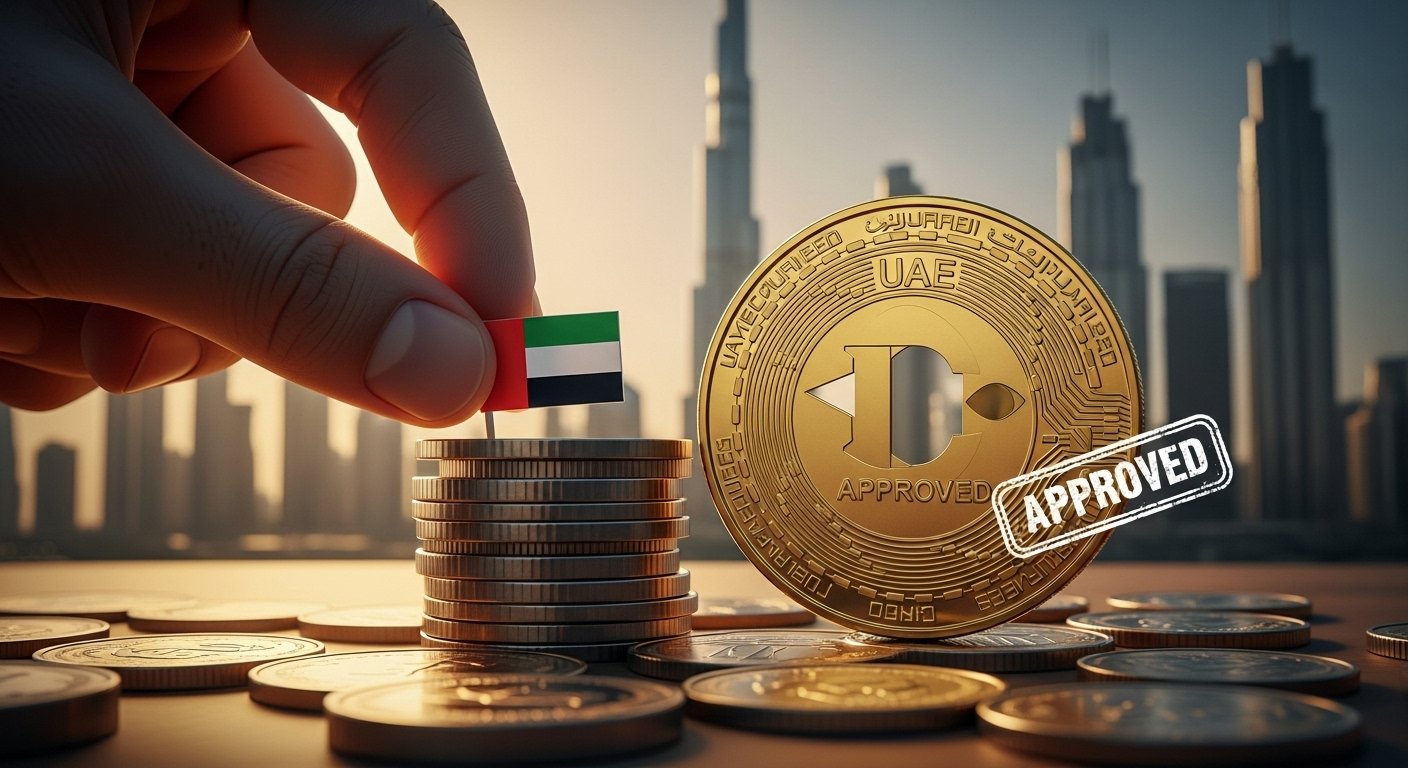
By becoming the first nation in the region to approve a central bank-registered USD stablecoin, the UAE has strengthened its reputation as a global hub for regulated digital finance. This move aligns with the country’s broader vision of becoming a leader in fintech, blockchain innovation, and next-generation financial infrastructure.
The Regulatory Framework Behind the Approval
At the heart of this decision lies a comprehensive regulatory structure designed specifically for digital payment tokens. The UAE has developed clear rules governing how stablecoins can be issued, managed, and used within its financial system. These regulations treat stablecoins as payment instruments rather than speculative assets, placing them closer to traditional financial services.
This framework establishes who can issue stablecoins, how reserves must be maintained, and what responsibilities issuers have toward users and regulators. It also defines the types of activities that are permitted, ensuring that stablecoins are used primarily for legitimate payment and settlement purposes.
By embedding stablecoins within a structured regulatory environment, the UAE has reduced uncertainty for financial institutions and businesses that wish to adopt blockchain-based payment solutions. This clarity is essential for large-scale adoption, particularly among banks and regulated entities that require legal certainty before engaging with digital assets.
What Central Bank Registration Really Means
The term central bank-registered carries significant weight. It signals that the stablecoin is not operating in isolation but is recognized as part of the country’s broader financial system. Registration implies accountability, transparency, and compliance with national monetary and financial stability objectives.
For users, this can translate into greater confidence that the stablecoin is properly backed, managed, and supervised. For institutions, it means reduced regulatory risk and clearer guidelines on how the stablecoin can be integrated into existing systems. For regulators, it provides visibility into how digital money circulates within the economy.
This level of oversight does not eliminate all risk, but it significantly improves the trustworthiness of the stablecoin compared to unregulated alternatives. In a world where trust is the most valuable currency, central bank registration offers a powerful signal of legitimacy.
Why a USD Stablecoin Matters More Than Ever
The U.S. dollar remains the world’s dominant reserve and settlement currency. In international trade, energy markets, and cross-border finance, USD liquidity is essential. For a global business hub like the UAE, access to efficient USD settlement is a strategic necessity.
A regulated USD stablecoin enables faster and more efficient digital dollar transfers without relying solely on traditional banking rails. This can be particularly valuable for businesses operating across multiple jurisdictions, where delays and costs associated with conventional correspondent banking can be significant.
By approving a USD stablecoin rather than focusing exclusively on a local currency token, the UAE acknowledges the realities of global finance. This pragmatic approach allows the country to support international commerce while maintaining regulatory control over digital payment instruments.
Implications for Banks and Financial Institutions
Banks are among the biggest potential beneficiaries of a central bank-registered USD stablecoin. With regulatory clarity in place, banks can explore new settlement models that leverage blockchain technology while remaining compliant with existing financial laws.
Stablecoins can enable near-instant settlement, reduce counterparty risk, and improve operational efficiency. For institutions involved in digital asset custody, trading, or tokenization, a regulated stablecoin can act as a reliable settlement layer that bridges traditional and decentralized systems.
The UAE’s approval may encourage banks to experiment with new products and services built around digital dollars, including programmable payments, automated reconciliation, and real-time treasury management.
Impact on Crypto Exchanges and Fintech Platforms
Crypto exchanges and fintech companies operating in the UAE stand to gain from the increased legitimacy that comes with a central bank-registered stablecoin. Regulatory approval can make it easier to establish partnerships with banks, attract institutional clients, and expand product offerings.
For exchanges, a regulated USD stablecoin may provide a trusted base pair for trading and settlement. For fintech platforms, it opens the door to compliant payment solutions that combine blockchain efficiency with regulatory assurance.
This development could also raise the bar for market participants, encouraging higher standards of transparency and compliance across the industry.
Benefits for Businesses and Corporate Users
Beyond financial institutions, businesses of all sizes may benefit from the introduction of a regulated USD stablecoin. Cross-border payments, supplier settlements, and internal fund transfers can become faster and more cost-effective when conducted through blockchain-based systems.
For multinational companies headquartered or operating in the UAE, a compliant digital dollar solution can simplify treasury operations and improve liquidity management. The ability to move funds efficiently while meeting regulatory requirements is a powerful advantage in today’s competitive global economy.
As adoption grows, stablecoins could become an integral part of corporate finance strategies, particularly in industries that rely heavily on international transactions.
What This Means for Everyday Users
While the initial impact may be felt most strongly by institutions and businesses, everyday users are also likely to benefit over time. Increased adoption of regulated stablecoins can lead to better payment services, faster transfers, and improved access to digital financial tools.
For consumers, central bank registration can provide peace of mind that the stablecoin operates within a supervised framework. This may encourage broader use of digital wallets and blockchain-based payment applications in everyday life.
As financial services evolve, users may find that stablecoins become a natural extension of traditional digital banking rather than a niche crypto product.
The UAE’s Broader Vision for Digital Finance
The approval of a central bank-registered USD stablecoin is not an isolated event. It fits into the UAE’s broader strategy of positioning itself as a leader in digital finance, blockchain adoption, and fintech innovation.

By developing clear regulations and welcoming compliant innovation, the UAE is creating an environment where global companies and startups alike can build the future of finance. This proactive stance sets the country apart from jurisdictions that rely on reactive or restrictive approaches.
The long-term success of this strategy will depend on execution, collaboration, and continued regulatory evolution. However, the foundation has been firmly established.
Challenges and Risks to Consider
Despite its advantages, the introduction of a regulated USD stablecoin is not without challenges. Issues such as reserve management, cybersecurity, operational resilience, and cross-border regulatory coordination remain critical considerations.
No stablecoin is entirely risk-free, and even regulated tokens must be carefully managed to prevent misuse or systemic issues. Transparency, ongoing supervision, and strong governance will be essential to maintaining trust over time.
The UAE’s regulatory framework provides tools to address these risks, but real-world performance will ultimately determine the success of this initiative.
Conclusion
The UAE’s decision to approve the first central bank-registered USD stablecoin marks a defining moment in the evolution of digital finance. By combining innovation with regulation, the country has demonstrated that stablecoins can be integrated into a modern financial system without compromising oversight or stability.
This move enhances trust, encourages institutional adoption, and strengthens the UAE’s position as a global financial hub. As stablecoins continue to shape the future of payments and settlement, the UAE’s approach may well serve as a model for other nations seeking to balance progress with prudence.
The journey is just beginning, but the direction is clear: regulated digital money is becoming a core component of the financial system, and the UAE is leading the way.
FAQs
Q: What is a central bank-registered USD stablecoin?
A central bank-registered USD stablecoin is a digital token pegged to the U.S. dollar that operates under official registration and oversight by a country’s central bank.
Q: Why is the UAE’s approval important?
It provides regulatory clarity, increases trust, and allows stablecoins to be used more widely by banks, businesses, and institutions within a compliant framework.
Q: How is this different from other USD stablecoins?
Unlike unregulated or offshore stablecoins, this one operates under direct central bank supervision, with defined rules and compliance requirements.
Q: Will this affect crypto adoption in the UAE?
Yes, it is likely to encourage broader adoption by reducing regulatory uncertainty and enabling safer integration of digital assets into the financial system.
Q: Could other countries follow the UAE’s example?
Very likely. The UAE’s approach demonstrates how stablecoins can be regulated constructively, making it a potential model for other jurisdictions.
Also More: Crypto Today New Bitcoin ETH XRP Extend Dip
